

Introduction
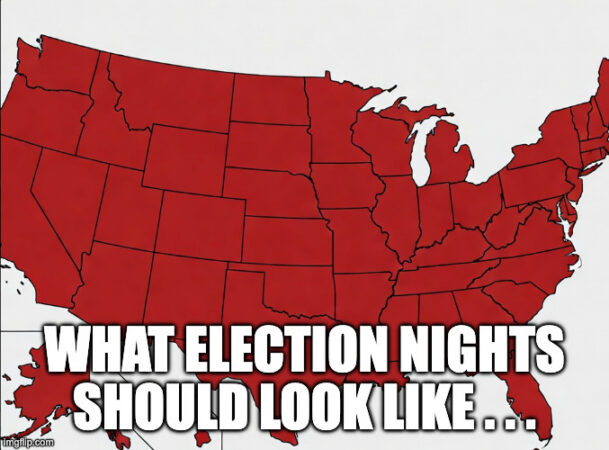
Over the last year or so, from time to time you may have wondered to yourself why I have taken it into my head to go around talking about the 19th Amendment so much. This, along with my supposed interest in repealing the right of women to vote. Why on earth would I ever do something like that? Well, you can’t expect me to talk about slavery all the time, can you?
In what follows, I am simply explaining my views, without any people yelling in the background. This is not the same thing as walking any of those views back. Here is another piece that I have written on the same topic, in which I also don’t walk anything back.
Boo!
I would estimate that I came to the convictions I currently have about the unfortunate impact of the 19th Amendment sometime in the early to mid-eighties, that being—more or less—forty years ago. During the course of those years since, having many other fish to fry, I have written scarcely a peep on the subject. In my two books on Christian nationalism, I don’t believe it comes up at all. My views may have leaked out here or there, but never once was I ever in a controversy over it. I was exceedingly well-behaved.
But now, finding myself being interviewed by this major news outlet, or possibly that one, almost on a weekly basis, I find myself being asked about it all the time. So what I would like to do here in this space is to explain to you all why these outlets keep asking me about this, and also explain to you (and to some of my friends and advisers) why I keep answering them.
And there are cogent reasons, I promise.
Why I Answer
So allow me to start with latter question. I am not a politician, and I never want to start sounding like a politician. “Thank you for that insightful question on the magnitude of the national debt. What I want to do is to go to Washington in order to fight for common sense solutions for the American people.” There are many things that our beleaguered nation needs, but more shuck and jive answers would not be among them. If I believe something, and I have good reasons for believing it, I am more than happy to answer questions about it. If there are deeper issues involved—and on this one, there most certainly are—I also welcome the opportunity to address those.
I do know that as a matter of practical politics, repealing the 19th Amendment is a non-starter. But as a matter of theological weightiness, discussion of the 19th Amendment provides us with a wonderful diagnostic test. All the elements of egalitarianism that you thought were the exclusive purview of the leftist progressives turn out to have something of a home in our conservative circles as well. Many conservative Christians attack feminism, but by this they mean third wave feminism. They do reject empurpled lesbians, true. But they don’t intend to oppose first wave feminism because that is what they unknowingly are. For more on all that, see the last section.
Why They Ask
Now of course the reason reporters ask me about this is because they believe it is a handy way to put a spotlight on my extremist views, allowing a gobsmacked public to then come take a look at the troglodyte. They ask the question in order to discredit.
And of course, it must be admitted that certain segment of the population really is gobsmacked. That portion of the public then decides to defend the republic by calling up our church office in order to cuss out the secretaries. Whenever a story like that NPR story drops, the secretaries have to stop answering the phones for a few days. And in addition to that, I am starting to get a regular stream of what I would call urbane old school hate mail—typed, stamped, return address, the works, concluding with sentiments like “I wish I could forgive you for being a pathetic human being.” But, you see, I don’t think this letter writer really does wish that he could forgive me. I think he actually likes self-righteous boomerism.
Now this round of intense interest in women’s suffrage began with the CNN interview, when Pamela Brown asked about the repealing the 19th Amendment, and my fellow minister Jared Longshore said, “I could go for that.” So Jared said it, I agree with it, and I have met Pete Hegseth a few times, and can you people not see the peril we are in?
In short, I am asked the question by left-of-center outlets because they believe it will make me (and our cause) look bad. On a practical level, I don’t mind looking bad in this way because it moves the Overton Window. As I have noted in other contexts, it is not possible to move the Overton Window from inside the window. In order to move the boundaries of acceptable discourse, it is necessary for someone to engage in unacceptable discourse. Someone must say what must not be said. Someone sensible must maintain what no sensible person maintains.
Now by “unacceptable,” I mean in Overton Window terms. Of course I do not mean unacceptable to God. There are some people on the right who have those crucial categories confused in their hearts, and who believe that anything unacceptable is going to move the window. The way this logic works, their next stop is going to be polygamy.
In the Meantime . . .
Christianity Today was kind enough to respond to my interview with NPR, voicing concern that my approach could “empower Democrats.” Given the fact that CT has been looking for gospel-centered ways to empower Democrats for a few decades now, I was unsure of what their problem was.
But with all of that said, I was happy to inform the world that my wife votes, my daughters vote, my daughter-in-law votes, my granddaughters vote, those who are of age, and the rest of them are going to be voting as soon as may be. This is because CT is exactly correct. For liberty-loving Americans to cut their voting power in half during this attempted commie takeover by the Theater Kid Marxists would be strategically suicidal. Nobody wants that, and that includes me.
And this brings up a point that I try to make every time I am interviewed on the subject. Sometimes this qualification makes it in the final cut (thanks, NPR), and sometimes it does not. Politics is the art of the possible. Political theology is to think through what you believe the ideal political structure to be, and to do it without becoming a dreamy utopian. Politics is what you would like to see happen in the next two presidential terms. Political theology is what you would envision a post-mill republic to look like, two and a half centuries from now. The two are connected if someone has an integrated worldview, but they are not the same thing.
What gets confused in the reporting on this issue of women voting is the distinction between those two categories. If you were to ask me what I envision as possible reforms that could perhaps happen over the course of the next two presidential terms, and which would therefore be my practical political priorities, I would say something like 1. outlawing all human abortion; 2. repealing Obergefell; 3. eliminating no-fault divorce; and 4. dismantling the administrative state. Now if the women were not voting, achieving all four would be significantly easier, but the women are voting. It is not at all practical to think that removing the franchise from them is even a remote possibility. At the same time, all four are a real possibility, even under the current conditions, and that is where our energy should therefore be directed. You play cards with the hand you were dealt, and that includes encouraging conservative women to vote.
And Also By the Way . . .
So the short term approach to this would simply be traditional conservative activism, registering as many conservative voices as possible, whether male or female. But what should we call the long term vision? Because I propose that this be done by means of planting churches, teaching people, establishing classical Christian schools, instructing students on how to think critically without flipping out, and modeling the pattern of household voting in conservative churches, my proposed name for this long term plan for the 19th Amendment should be called something like democracy.
In the meantime, I believe that women ought to vote—particularly the sensible ones. And so please understand my dedication to this. I believe that all the women in Maricopa County should have their votes counted. The same would go for all the women in Fulton County. But there are limits. I don’t think that any deceased women on the Oregon voter rolls should get to vote, nor am I a big fan of the women who materialize from nothing at 2 am in order to buttress the campaign a Democratic candidate who was losing at bedtime.
In short, the people who freak out over my stated desire to limit the franchise by legal and democratic means a couple centuries from now, but who also do more than jigger with elections involving actual women, alive today, are people who are not exactly debating in good faith. It is hard to argue that the franchise is sacred when reacting to Wilson while at the same time be driving a truckload of ballots to the landfill. I just mention it.
So Why Talk About the Issue at All?
I have already mentioned the incidental reason to answer the question when it is posed. That is to avoid looking coy and disingenuous about our program, whether short term or long term. Parts of this integrated worldview may be implemented in my lifetime (dismantling Obergefell) while others are extremely unlikely to happen in my lifetime. An example of that would be America becoming a confessional Protestant state. I am afraid that I will have to be content to look down on that one from Heaven’s balconies.
The long term goal is a constitutional theocracy, and having that goal clear in our minds helps us to frame our short term goals in ways that will be consistent with that larger goal when the time comes. This is not difficult to understand.
I also mentioned a second reason, which is that this is one of the topics that helps to move the Overton Window. There was a time, say twenty years ago, when to publicly say what we have said about the 19th Amendment would have gotten us exiled from public life forever. That is not the case now. In fact, if you look at the range of options that are being thrust at the political public, including proposals from the unstable who want to restore the reputations of Hitler, Tammerlane, and Ivan the Terrible, I find myself in the unusual position (for me) of being something of a moderate—being, as I am, a bit to the left of Jeb Stuart.
But the third reason is the big one, at least for me. I am convinced that feminism lite is pervasive in the conservative evangelical Reformed world. Any discussion of the 19th Amendment makes folks in this category wince, not because they don’t want half the conservatives to stay home in the next election, but rather because the idol of feminist individualism has been insulted. They want to be red state first wave feminists. But a true conservative reformation is not really possible when a large number of conservative leaders have unknowingly adopted radical premises. Premises will always drive the conclusions, and universal suffrage is not a conservative premise.
When the big push to eliminate the Electoral College comes—and it will come at some point—those conservatives who have tried to incorporate radical premises into their worldview will be hard pressed to mount the kind of resistance that will be required in that moment. You cannot counter what they are doing if you, in part, are thinking the same way they are thinking. The levelers will point indignantly to the popular vote at the national level, and if a third of the premises in conservative heads are somehow saying amen, then that battle will be lost as well.
It is one of the glories of our system that a candidate can win the national popular vote and lose the election. That doesn’t bother me in the slightest. Nor does it bother me that a baseball team can score more runs over the course of the seven games of the World Series than did their opponent and still lose the series.
Every healthy society will have a strong democratic element, which at the Founding was supposed to be the House of Representatives. But it was also supposed to be cordoned off there. We were founded as a republic, not a democracy. The 17th Amendment, providing for the direct election of senators, was a downgrade similar in effect to the 19th Amendment. Prior to that, senators were selected by the state legislatures, and were in Washington to represent the interests of the state as a whole. States were entities that needed to have a voice and the 17th Amendment took that voice away. And it used to be that households were an entity that had a voice also, and the 19th Amendment took that voice away.
We were a republic with democratic elements, but the idea of a pure democracy gave the Founders the fantods. The 26th Amendment was another example of this same leveling impulse.
So conservatives have to do better than simply trying to conserve the gains and successes of a previous generation of radicals. Conservatism must stop being content to be the “shadow that follows radicalism to perdition.”
It is one thing for a conservative to not want our contemporary debates on current issues to get sidetracked into hot debates over the 19th Amendment. That is a healthy impulse, and I actually share it. But there are many conservatives today who are personally affronted by these discussions because they have not yet been freed of their inner feminism.
I will finish with an illustration I have used over and over again. I say this just to let you know that I am aware that I use it all the time—but not to signal that I feel at all bad about it. It is a good illustration and points to the essential issue here.
Statists want society to be atomistic, where every individual is a solitary BB. And they want to do two things with this. They want the state to be a sack, and they want to dump all the BBs into that sack. The result has all the structural integrity of a huge bean bag chair. To make their manipulative tasks easier, they then pour several quarts of oil into the sack—ubiquitous porn, legalized pot, no-fault divorce, all things that prevent the solitary BBs from bonding together with other BBs into complex molecules. Such metallic molecules, were they to form, would be households, clans, towns, churches, denominations, and so on, and all of them much harder for statists to manipulate.
So when real reformation and revival come, it will transform everything. It will not simply be that such reformation will enable conservatism, just the way it is now, to prevail. No. Everything will be transformed, including conservatism. And in that day we will all be astonished to discover just how much of the progressive agenda the conservative resistance to that agenda had actually internalized.
And now . . . if Suzie Q, your high school senior, isn’t registered to vote, get her down there.