

Introduction
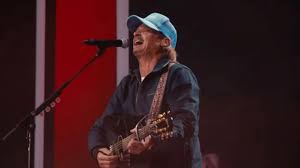
So what did I make of Turning Point’s halftime alternative? It felt the same way that it did after Seattle made their first two field goals. We are not there yet, but I really like the way this is going. Let’s take it as a good omen.
My reasons for thinking this are stated below. While these observations will contain some criticisms of the alternative event, please keep the broader perspective in mind. I would have preferred two touchdowns, but the two field goals are great. Given the magnitude of the challenge, the TPUSA folks did a fantastic job.
Seriously, great work.
Actual Impact
The impact of what Turning Point did was significant. During halftime itself, about 6 million people went over to watch the alternative halftime show. That was not trivial. The Super Bowl advertisers were paying top dollar for every second, and they didn’t want to lose those 12 million eyeballs. If you do a little checking, looking past the standard Nielsen ratings, things are pretty grim over at NFLville. According to Samba TV, around 48 million people watched the Super Bowl, and about 22 million of them turned off the Evil Rabbit Revue or went over to the Turning Point event. This means that the halftime extravaganza put on by Corrupt Cottontail was down 39% from Kendrick Lamar’s 2025 show. Or as a platinum-level advertiser might put it, having brushed up on his Spanish recently, no bueno.
But at the same time, it should not be forgotten that the viewership of the Kid Rock halftime was not limited to those 6 million watching it in real time. Responsible estimates place total views across all platforms (YouTube, Rumble, etc.) at around 25 million. As the dust settles, it is likely to go even higher.
And what this means is that we could quite easily see lawsuits from advertisers, who all paid for something quite different than what they got.
The Insult That Mattered the Most
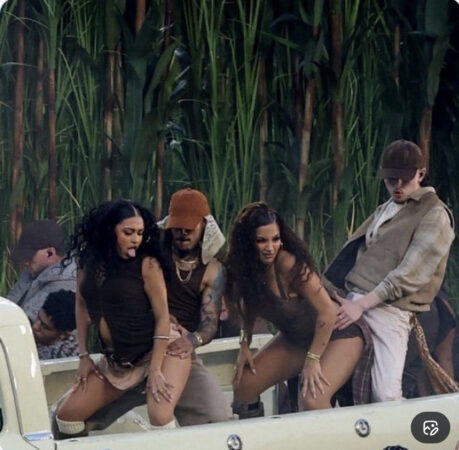
Okay, so a bunch of Evil Rabbit’s lyrics were vile, but did not make an immediate splash because they were censored by means of Spanish—far more effective for most viewers than mere bleeping would have been. He performed his whole set in Spanish, which is what we might call the merciful side of the insult. The lyrics were bad enough to summon some FCC fines, or so it would seem . . . because some people out there understand Spanish.
And there was apparently some inappropriate grinding, of the sort that Christians have come to expect as par for the course at your average Super Bowl halftime. The challenge there is that it is hard to get everybody worked up over that when, just a couple of notches better, you consider that the behavior and outfits of the cheerleaders at pretty much every NFL game.
On the positive side, we made it through yet another Super Bowl without a garlanded bull being sacrificed on the fifty yard line.
The most objectionable thing about the performance was that it was—in a middle finger kind of way—conducted entirely in Spanish. I am speaking here as an amateur sociologist, and not in my usual role as an elderly and somewhat grumpy moralist. There is nothing sinful about Spanish, the same way there is something sinful about filthy language in Spanish, as sung by our friend Heinous Hare. The Spanish, considered in isolation, is neither here nor there.
The issue is where and when and how it was done. The thing that currently has America on edge is the average American’s foreboding sense of a loss of place. All the things you love and used to be able to take for granted have been tipped over, moved around, or jettisoned. It is challenging enough to have your barely intelligible tech support guy talking to you from Mumbai, but to sit there as an alien at your own Super Bowl? “For with stammering lips and another tongue will he speak to this people” (Is. 28:11). “The Lord shall bring a nation against thee from far, from the end of the earth, as swift as the eagle flieth; a nation whose tongue thou shalt not understand” (Deut. 28:49). It is the high-handedness of the insult that is going to register with people . . . and apparently has registered in a big time way.
It is as though you invited someone over to your house for Sunday dinner, and they showed up with a couple of extra uninvited guests. You scrambled and set out a few extra plates, but in the painful time that followed, they insisted on conducting all their conversation—with one another and not with you—in a language unknown to you or anyone in your family. The fact that you found out later that their talk consisted almost entirely of dirty jokes did not improve your mood. Your sour opinion of what had happened was not, shall we say, ameliorated.
All of this is to say that the Super Bowl halftime was not a multicultural celebration of America’s Latin Quarter, but was rather intended to be an Anglo Humiliation Ritual. The raunchy part was aimed at our residual and fading Christian consensus, and the no hablo part was aimed at our residual and fading American identity. The whole thing was really inflammatory, in other words, and was intended to be. I mean, be honest. Had anyone actually heard of Offensive Oryctolagus Cuniculus before he got this gig? The highest any song of his had charted was #85. It seems to me that he was imported in the spirit of take that.
The Alternative Show Itself
Consider this as my attempt to help Turning Point view their game film. Not that it will be any kind of big help . . . just my two cents. Spokesmen for TPUSA were exuberant after the fact, as they had every right to be, and I saw one of them say that they were definitely going to do it again next year. Since they are going to do it again, and because a number of their viewers may simply have been curious, checking it out just this once, their Alternative Halftime next year will have to compete on two different levels. This year they only had to compete on one.
First, as always, they will have to compete with whatever the staff Bacchae on Roger Goodell’s advisory team come up with. If they had their wits about them, they would offer up a really tame act next year—you know, bring the Cowsills out of retirement or something—in order to rob Turning Point of any outrage fuel on their second attempt. But I don’t believe that we live in an era when progressives understand the strategic value of exercising any kind of restraint. So Turning Point will be up against next year’s halftime act, whatever that orgiastic ensemble might be.
But they will also have to compete with their own offering from this year. They did very well this year, both in the show and in the numbers, but they will absolutely need to up their game in both areas next year. The show will need to be markedly better, and the numbers will need to be significantly higher. One of the principles of war is pursuit.
So with that in view, what sorts of things should they look at?
In the first place, the Turning Point show distinguished itself by the mere expedient of not being vile. A low bar, but we live in a time when we are grateful when anybody clears it. These performances were way better than what was going on with Evil Rabbit, but “better than vile” is not the same thing as entirely wholesome. The alternative had some low-life stuff on the Georgia back roads from Brantley Gilbert. Lee Brice was a member of the drinking class—rowdy, wild and loud. He was also, in a different song, hard to love, short-fused, and a relational wrecking ball. Good thing his wife loved Jesus, unlike the American men they have to put up with. There is more to being a husband and father than loving the red, white, and blue, coupled with a willingness to kick commie butt. Then there was Kid Rock with a 1999 song, representing the old Adam. After that, there was a violin and cello piece, very nice, and Robert Ritchie (Kid Rock’s given name) came back to sing “Til You Can’t,” with an added verse calling for repentance. That was a really good song. The heathen song, the break, and then the song inviting people to come to Jesus was meant to show us a redemption arc, but in my thinking, that point was way too subtle. We do not live in subtle times. Like a lot of country, there was a lot of sin, and then Jesus. And while that is somewhat correct, and kind of what’s needed, still . . .
It sure looked like Kid Rock was lip syncing his first number, but that was actually a production fail. That song had a rapid back and forth with his DJ singing alternately with Kid Rock, and the DJ was lost. So it was not one kind of fail, but rather the other kind. That would be a live and learn kind of thing.
Gabby Barrett did a really great job with The Good Ones.
The production values are the real uphill challenge. They are up against a stadium jammed with over 70,000 people in those seats. A stage crowd hidden in the dark with lots of flashing lights will not provide an effective counterpoint spectacle. The Super Bowl halftime really is a spectacle, of the kind that Aristotle talked about, and that cannot really be matched in a studio. This is just my opinion, but I think they should figure out a way to come up with some real crowd energy, or else to dispense with the crowd altogether—and just perform for the cameras.
So if I may, I would like to conclude by modifying a suggestion my wife made, and then pass it on to the Turning Point team. What say we just turn it over to the Texas A&M Marching Band?