

Introduction
Jesse Jackson died yesterday, at the age of 84. He was hailed at his passing for being a civil rights icon, but this brings up a delicate issue. Jackson has now gone to meet his Maker, but the definition of “rights” that he fought so hard to establish——and in many ways successfully—was a truly destructive view of rights. One of the very best things we could possibly do for everyone—blacks especially—is repeal the 1964 Civil Rights Act.
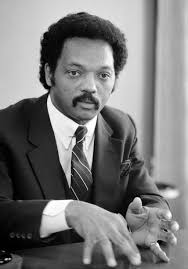
And this is the delicate part. It really is unseemly to rejoice in a gleeful way over the misfortune of others in a time of grief, and so I honestly wish the best for Jackson’s family and friends as they mourn his passing. That’s one thing. But the other is that he really was iconic, becoming a symbol of a definition of “rights” that kicked open the door to all manner of race hustling and shakedown artistry. Every mention on the news of Jackson as a “civil rights activist” helps to cement in our minds a wrong-headed view of the whole business. We really need to learn what’s wrong with civil rights, and the sooner the quicker.
I say this understanding the play that will be run on me. Liberals will pass a law, calling it something like Sunshine for Everybody Act, and when you register your concern about the provision that taxes everybody who enjoys too much sunshine at crushing rates, in order to give flashlights with fading batteries to everyone who lives in places that have gloomy winters—the flashlights, incidentally, manufactured by a friend of the bill’s sponsor, and costing the government about $5K apiece, and I think this sentence has gotten out of hand, just like the flashlight giveaway program did, you are tagged as a bigoted hater of sunshine.
But let us proceed anyhoo.
Start With the Obvious
The problem lies in how we go about defining that troublesome word rights. What do we mean by human rights? What is meant by civil rights? Our problem is that our nation is torn apart by two radically different definitions of that word rights. And the chasm between the two definitions could not be wider.
Let us take two examples that will illustrate the principle nicely. We have, under the First Amendment, the right to free speech. We also have, according to leftist demands, the right to affordable health care. Now one of these things is not like the other one, and vice versa.
How much does our right to free speech cost the government? How much does it cost my neighbor? In the admirable words of Thomas Jefferson, me saying what I think about the Epstein Files, neither picks my neighbor’s pocket nor breaks his leg. It does not concern him. Moreover, as he lets me go on and on about it, my use of my resources to talk about it, costs him absolutely nothing. In addition to that, it also costs the government absolutely nothing to let me run on the way I tend to do. All they need to do in order for me to exercise this freedom of mine is . . . nothing.
Speaking of the Epstein Files, let us not veer off the main point, but I should be amiss if I didn’t point out the Qanon people and the Pizzagate people had . . . something of a point. And we should all feel a little bit bad for the flat earth people who by this point are the only conspiracy buffs to still not have any kind of point. But . . . back to business.
Affordable health care is a different thing altogether. Every right, once granted, places an obligation on our fellow citizens. With the right to free speech, that obligation is to stay out of it. The obligation is to mind your own business. Tend to your own knitting. But affordable health care, if considered to be a right, places an obligation somewhere out there in the citizenry. That obligation now exists for somebody to provide affordable health care.
If one person has the right to consume something for free, then that means that somebody else has the obligation to produce it for free.
If they do this in the private sector, say through a philanthropic foundation at the high end, or a soup kitchen at the low end, we call this charity. If it is done through the government, backed by men with guns, then the word for it is slavery. If you go grab a doctor, and make him provide all that affordable health care, then he is the slave.
If you disguise what you are doing by spreading the cost of the affordable health care across the entire base of tax-paying citizens, then what you have created is time-share slavery. Nobody notices at first, but the time-share slavery starts to stack up . . . because we are soon dealing with affordable housing, and affordable dental care, and affordable education . . . and affordable chocolate milk.
So my free speech places an ethical obligation on my fellow citizens, which is to be a responsible human being, one who does not seek to interfere with my right to speak. And being a responsible human being in that way costs him nothing. All he has to do is . . . nothing. All he has to be is . . . an American.
But my right to affordable health care creates, in principle, an obligation to enslave the doctors.
If I have a right to not have my chocolate milk stolen from me, then all the others have to do is respect my private property. Get their own chocolate milk. But if I have a right to own a quart of free chocolate milk, then somebody out there has an obligation to cough it up.
Age of Entitlement
A few years ago, Christopher Caldwell made a splash with his marvelous book Age of Entitlement. In that book he argued (and demonstrated) that the United States is currently a house divided, trying in vain to operate in accordance with two very different constitutional visions. One of them is the Founding vision, based in English common law, the Christian faith, the Constitution as understood by those who drafted and ratified it, and a handful of other flying buttresses.
The second vision is the one set in motion by the 1964 Civil Rights Act. The problem was not that the Act gave blacks certain rights, but rather that it gave them the wrong kind. It created the entire apparatus that misconstrues and misapplies the logic of rights.
If civil rights for a black man meant that he was going to be protected from threats of bodily harm by Bubba if he tried to vote in rural Mississippi, then rights here means what it ought to mean. And that man should have his rights protected.
But if civil rights for a black man meant that he was going to be promoted well past his abilities in order to make up for an injustice perpetrated against someone of the same color 150 years ago, then the word rights has been perverted, and twisted beyond all recognition.
And it is this latter system, as Coldwell shows, that has corrupted our constitutional order.
Returning to An Earlier Point
I said earlier that one of these things is not like the other one, and there is more than one way that this is true.
The First Amendment does not grant us the right to free speech. As the Declaration phrases it, we are endowed by our Creator with the right to life, liberty, and the pursuit of happiness. That word happiness in an earlier draft was property. The right to free speech is a right that is subsumed under the right of liberty—to travel about as I please, talking about whatever I want to as I go. This is bestowed on us by our Creator, and the government has the obligation to guard and protect that right. If they were the ones who bestowed that right, then it is no longer a right, but rather a privilege. Whatsoever the government giveth, the government taketh away, and blessed be the name of the government.
Now the right to an endless supply of free chocolate milk still uses the language of rights, giving it a temporary and very deceitful shine, but it is manifestly a privilege. The language of rights enables the government to enslave the chocolate milk manufacturers, while feeling high and righteous, for do not the recipients of the milk have a right to it? But since the government is giving it away, there is an underlying knowledge that all the recipients have, nagging at them, which is that terms and conditions may apply. Also shipping and handling. Also the upcoming reform of Social Security. Reforms of programs like Social Security, if done in the private sector, would land the entire board of directors in the hoosegow. But that is another topic for another time. Suffice it to say for the present that it is frequently the case that the supply of free chocolate milk runs out. The enslaved dairymen of the hated one percent came up with a story about how all the cows had died.