

Introduction
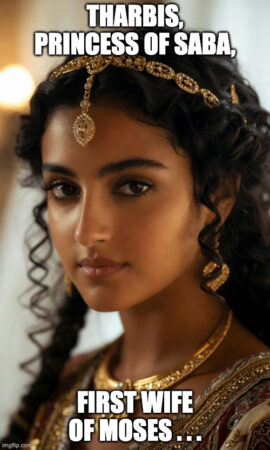
The recent behavior of certain online provocateurs has meant that it is time for us to do a Bible study on what they are pleased to call “interracial marriage” or “race-mixing.” Is it forbidden? Is it unwise? Is it a violation of a normative pattern? What is it exactly?
That last one is a great question, actually, which we will eventually get to further on down. In order to have an opinion on interracial marriage, you will need also to have an opinion on what constitutes “races.” We will drill down on that point in just a bit, but let’s get some Bible out on the table first.
Bible, Bible, Bible
Do we have in Scripture any examples of lawful marriages between races? Now the examples I am going to give are examples that I would call inter-ethnic, and not interracial, but bear with me. I think that what we are doing will become obvious as we go on. I will get to the word race in just a short while, but I don’t think we need to deny ourselves a little bit of fun in the meantime.
Moses was married to a black woman, a Cushite, an Ethiopian.
“And Miriam and Aaron spake against Moses because of the Ethiopian woman whom he had married: for he had married an Ethiopian woman.”Numbers 12:1 (KJV)
There is no indication in the text that the opposition was because of her skin color, but there was serious opposition to her. I believe the most likely explanation is that she was a wife from Moses’ time as a prince in Egypt. Josephus tells us that Moses had besieged her city (Saba), and that she had fallen in love with him from the city wall. Her name was Tharbis, and she offered to surrender the city in exchange for marriage, which Moses agreed to. She was apparently not part of the Exodus, but joined up with Israel later on. I think her later arrival destabilized or threatened the positions of influence held by Miriam and Aaron, and so they objected. In response, God made Miriam even whiter than she had been before, but this was not considered an improvement (Num. 12:10-11). It really is okay to be white, but not that way. But as far as the scriptural text is concerned, the simple fact of this marriage is taken right in stride.
And Moses was apparently a repeat offender, doing this not once, but twice (Ex. 2:16-22). After fleeing from Egypt, he came to the land of Midian and married Zipporah, one of Jethro’s seven daughters. He is called “an Egyptian” by them (v. 19) and he marries a woman of Midian. Okay, then.
Judah married a Canaanite woman named Shuah (Gen. 38:2).
Then there is Joseph, a Hebrew, who married Asenath, an Egyptian woman (Gen. 41:45)—the mother of two of the tribes of Israel. Rahab, an Amorite woman, came out from Jericho and married Salmon, a Hebrew (Matt. 1:5), becoming an ancestress of the Messiah. Her son Boaz married Ruth, calling her a Moabitess as he did so (Ruth 4:10). She too has a place of honor as an ancestress of Christ. So their son Obed was therefore a mixed breed, one quarter Hebrew.
David married Maacah, daughter of the king of Geshur. She was an Aramean (2 Sam. 3:3).
Bathsheba, an Israelite woman, was initially married to Uriah, a Hittite (2 Sam. 11:3).
And we also have the provision in the law that governed how an Israelite warrior could take a wife from among the captives of war, a woman who had grown up among one of their enemy nations (Deut. 21:10-14).
We could go on, but as the point has been made, let’s not.
Yeah . . . But . . . However . . . But . . .
So then the question is, given all the above, what was behind the repeated requirements that Israel not intermarry with other peoples? What was going on with that?
“Neither shalt thou make marriages with them; thy daughter thou shalt not give unto his son, nor his daughter shalt thou take unto thy son. For they will turn away thy son from following me, that they may serve other gods: so will the anger of the Lord be kindled against you, and destroy thee suddenly.”Deut. 7:3–4 (KJV)
And Nehemiah was furious with the people over their intermarriages with pagans.
“And I contended with them, and cursed them, and smote certain of them, and plucked off their hair, and made them swear by God, saying, Ye shall not give your daughters unto their sons, nor take their daughters unto your sons, or for yourselves. Did not Solomon king of Israel sin by these things? yet among many nations was there no king like him, who was beloved of his God, and God made him king over all Israel: nevertheless even him did outlandish women cause to sin.”Nehemiah 13:25–26 (KJV)
This is why Ezra required such a radical repentance, demanding that they put away their foreign wives (Ezra 9:1-2; Ezra 10). These divorces were not just lawful, they were required. And why? Ezra repeatedly tells us what the problem was—it was because they were “doing according to their abominations” (Ezra 9:1); he mentions “their abominations” (Ezra 9:11), and “the people of these abominations” (Ezra 9:14). The men of Israel had married into a culture filled with detestable practices, and with no repentance on anyone’s part at all. This undoubtedly included sexual and idolatrous corruptions. Nevertheless, Ezra does not simply issue a mass divorce. A significant part of the tenth chapter is devoted to them deciding to work through all the violations, doing so case-by-case. That means, plainly, that if they came upon a Ruth, or a Rahab, or anyone else who had repented of and abandoned the gods of their people, and had converted to the sincere worship of Jehovah, they would have been good to go.
And so this means that the issue was always moral, covenantal, religious, spiritual. It was not what we would call ethnic or racial. Not at all. Not even a little bit. It was not a matter of bloodlines or DNA or the shape of anybody’s nose. So there’s your harmonization. It was a matter of idol worship, and the detestable practices associated with that idolatry. It was lawful for Boaz to extend the hem of his garment over Ruth because she had plainly abandoned her gods (Ruth 1:16).
Pesky Definitions
Let us now turn to the reasoning of our provocateurs.
Is it lawful to marry your sister? Well, no (Lev. 18:9; 20:17; Deut. 27:22), and this restriction does not perplex us. We agree with it, and on top of everything else we know how to define sister. You grew up with her, and she is clearly within the prohibited boundaries of consanguinity. You know who she is.
Okay then. Let’s take the mildest form of anti-miscegenation, where it is said that marrying someone of “another race” is simply not normative. Not necessarily a sin, but a little bit “out there” in some way. So a dutiful son or a dutiful daughter wants to stay away from this thing. “Do not touch the thing,” our would-be ethicists warn us. “Okay,” we say, eagerly. “We are eager to obey you. What thing must we not touch?” “Not telling,” they reply archly. “But you’d better not.”
It is as though the Lord told Adam that there was one tree in the garden that he must not eat from, but that the Lord wasn’t going to tell him which one it was.
Back when anti-miscegenation laws were a thing in the old South, they struggled with this problem, and speaking quite frankly, got beat up by it. A black is a black. Someone with a white parent and a black parent is a mulatto. A child with one black grandparent is a quadroon, one quarter black. An octoroon has one black great grandparent. Obama, as you may recall, was a mulatto. The problem presented by such fractions led some to resort to the “one-drop rule,” in which someone with any black blood anywhere in the family tree was categorized as black. The rule led naturally to the absurdity of having to deal with white black people. I met a man once whose grandfather was born in New Orleans as a black Roman Catholic and died in Ohio as a white Lutheran.
Notice how, in this system, the blackness has to be considered a contaminant. If it were simply a matter of ratios, the person would be considered white as soon as they were mostly white. But “one drop of white blood” was not enough to do anything apparently, so anemic do they think white blood must be, but one drop of black blood was sufficient to pollute the whole show. This kind of thinking is not just stupid, it is wickedly stupid. It is a sin to be this stupid. You can’t be this stupid without it being at least partly your fault.
You can’t be this stupid without it being at least partly your fault.
We can make the same point another way. Look again at the various biblical marriages I listed earlier. Is a Midianite marrying an Egyptian interracial? Is an Amorite marrying an Israelite interracial? Is it interracial for an Englishman to marry a Spaniard? How about a boy from North Dakota and a girl from South Dakota? How about a white Caucasian from Germany and a very dark Caucasian (the older classification) from Sri Lanka? If you want us to respect the normative boundaries you have insisted on, then would you be so kind as to define what those normative boundaries actually are?
For the hard anti-miscegenist, who is not allowed to marry whom? Or for the soft “this-ain’t-normative” guy, who should be discouraged from marrying whom?
In the recent discussions online, the marriage of a white guy to a Hispanic woman was being treated like an interracial marriage. We can’t have someone of northern European descent marrying someone of southern European descent! This kind of thing could make a cat laugh.
The bigot finds that his head is starting to hurt by this point because he was told there would be no math. He wants to unleash his inner jingoist, but he was never good at fractions. He ponders for a bit, and then lands on a lemon-squeezy solution. “Let’s go by color!” White people should marry white people, brown should marry brown, and black should marry black. Now we don’t need to get into any math, or genetic testing, or blood samples or anything so complicated. All we need now is a color wheel from Benjamin Moore.
This is an approach to ethics that is favored by simpletons everywhere. It is hard to decide if someone crossed a biblical line by having too much to drink, and it is easy to tell if they had anything to drink at all. We can’t see moderation, but we can see a bottle of beer. It is the same kind of thing here. They can’t tell you if a Navajo can marry a Cheyenne, but they can tell what their skin tint is! They can tell that at a glance, with no thinking required at all. The fact that no thinking is required at all turns out to be most fortunate, given the limitations.
So have it your way, and let’s try to do this by color. But this runs us into the very nature of ethnicity. Let me resort, once again, to the fine definition of ethnic identity offered by Steven Bryan:
“The building blocks of ethnic identity are (1) a shared name, (2) a shared sense of place, (3) a shared sense of the past, (4) a shared sense of belonging or kinship, and (5) a widely shared set of beliefs and values that give rise to a shared set of practices and norms. This fifth building block comprises . . . such things as religious beliefs and practices, language, cultural conventions, and customs, as well as cultural ‘products’ such as literature, music, architecture, and art.”
Steven Bryan, Cultural Identity and the Purposes of God, p. 43
I have had numerous occasions to cite Bryan before, but I want to make a new application of him here.
Suppose we have a marriageable daughter, and she and her dad were talking about two suitors who were seeking her hand. One was a fellow American, had grown up in the same town and region, her family had been here for two and a half centuries and his family had been here for three centuries, they were all part of the same church community, sharing key doctrinal sentiments, and everyone involved loved the blues. His favorite food is grilled cheeseburger. He is a black man. Now I am not asking if this match is a good idea. I have no idea. It might not be. What I am asking is whether or not it would be a match outside the ethnic boundary line. Would it? For those hardy souls who answered yes, I would then make the suitor a octoroon in our thought experiment, and what now? Again, don’t say whether you think it a good idea or not. Just tell me if it is between two ethnicities—and thus not normative in the eyes of some. And if you think it is not a good idea because you differ with Bryan’s definition of ethnic identity, then would you be so kind as to provide us with your definition of ethnic identity?
Now flip things around. Our other suitor is white, exactly the same skin tint. He even tans the same way in the summer. But he is from eastern Romania, and grew up in an orphanage there. He arrived in the States two years ago, and is making decent progress with his English, but is still hard to understand sometimes. He is mostly Calvinist, loves the Lord, and is still getting used to the liturgy of his new church, although he mostly likes it. He has no idea what he thinks of the blues, but his very favorite dish is creier pane—fried calf brains. Would this, if it came off, be a marriage of two ethnicities? And thus not normative? But it was between two white people.
The one thing that could be said for the Romanian is that his grandchildren would blend right in with white America, no questions asked. The black suitor would have grandchildren who would blend in a different way. They might well look different, a bit more brown, thus identifying themselves as people that simpletons are invited to think simplistically about.
The people who talk as though the “races” can be defined as readily as triangles can be defined are way out over their skis. Instead of debating them, we need to start by requiring them simply to define their terms. This sin, this crime, this non-normative behavior occurs when who does what to whom? Half of America seems to have Cherokee blood back there somewhere. Do they get to marry anybody at all?
Normal or Normative?
It is perfectly lawful (and normal) for cultures to want to preserve themselves. This is not just a liberty that is granted to the Japanese, or the Israelis, or the Navajo, or Armenians. Equal weights and measures, right? Anglo-Americans can feel the same way, and with no sin in it. Birds of a feather do flock together, and people ordinarily pair off within their tribe. It makes perfect sense. Such conservatism is not bigotry.
But normal is not normative. Normative has an implied ought in there somewhere. There was also no sin in the desire of youngest sons in the mid-nineteenth century to want to leave Italy, or Germany, or Ireland, and come to America (legally). Sometimes, for the sake of economic opportunity, they came as individuals, in order to be assimilated. They were deciding that, although their great grandparents were Italian, their great grandchildren were going to be American. Normal, and lawful.
Other times, when larger numbers came, they did so with the intention of becoming an American sub-culture, and so Chinatown was born. Normal, and lawful. Sometimes memory of the old country was completely lost, and in other cases, it was not completely lost. My ancestor came from Scotland in the 17th century, and I am still aware of my roots there. Other Americans have no idea, and Ancestry.com has to tell them about it.
There was no scriptural prohibition of emigrating to America, and there was no scriptural prohibition of staying in your home country, and marrying a home town girl.
But there are two basic ways that sin can creep into this—and sometimes gallop in—with both of them being ideological. I am referring to those instances where choices are made or rejected because the person is in the grip of a bad idea.
The idea can be an ideological in its fascination with the “other.” This person has internalized the idea that even to prefer a fellow Anglo would be irredeemably racist. Driven by white guilt, or self-loathing, or having bought into the standard commie account of Anglo-American rapine and pillage, this person is resolved to conduct a personal reparations campaign on the level of romantic and erotic attraction. Gilbert and Sullivan wrote about the “idiot who praises/with enthusiastic tone/every century but this/and every country but his own.” When that attitude gets into somebody’s dating life, there is a serious problem. But the problem is not the color of the person they date, the problem is the lame reason why they are attracted to that person.
The other way that sin gets into the mix is when someone argues that to marry someone “different” is sinful, or ethically sub-par in some way. As shown above, they are reduced to simplistic formulae when asked to define what is allowable difference and what is not. This is the problem of the person who is a bigot. I don’t need to go into any deep discussion of such “racism” because we have been harangued about our racism for three quarters of a century now. Some of the haranguing has even had trace elements of truth in it, and so everybody knows by this point that Michael Spengler is not the prophet we have been waiting for.
Why Are We Talking About All of This Now?
So why is miscegenation an issue all of a sudden? Why are we even talking about this? I will tell you.
The reason is that we are in the middle of a large-scale reactionary movement away from the globalist agenda, which has had two major components that are relevant here. One is their “no such thing as borders” doctrine, and the other is the “soft on violent crime” doctrine. Both of these doctrines have been deployed as devastating weapons against America, the last vestigial nation left over from the first Christendom.
The first was typified by the state of the southern border under Biden, and the second was typified by the murder of that poor girl on the train. The first is typified by the lawlessness of white liberals in Minneapolis, and the second by the gun violence in Chicago every weekend.
The first part of the solution will be to deport millions. The second will be to impeach those judges who keep releasing violent criminals back onto the street. And while responsible reformers are engaged in supporting all such efforts intelligently, we will have to ask the general public to overlook those strategic simpletons who keep trying to validate all the slanders that have been leveled against us for decades. At the very moment when large numbers of Americans had begun to realize that the plague of “racism” was largely a figment of overheated liberal imaginations, a number of volunteers set about to prove to the world that their slanders weren’t imaginary at all. Thanks, guys.
I just mentioned “reasonable reformers.” I refer to those conservatives who have not given any credence to the raced-bros, but who have continued to support the invaluable work of ICE, and who see the demented policies of anarcho-tyranny for what they are. These are the ones who have kept their eye on the ball. Anarcho-tyranny is when violence and mayhem on the part of criminals is winked at, and law-abiding citizens are suffocated under a regime of regulations that is enforced with authoritarian diligence. There are many conservatives who get harangued by the dark anons as though they were cuckservatives, or prisoners of the post-war consensus, simply because they have not over-reacted by lurching into the liberal’s slanderous caricature of what it means to be right wing. To those ordinary conservatives who don’t care that Lenin’s grandfather was a Jew, well done.
So our problem is millions of illegals. The problem is violent crime, unaddressed (Ecc. 8:11). The problem is not that your pastor’s son started dating a godly young Moabitess. She’s a good one, the mother of our Obed.