

Introduction
Last week a random thought occurred to me, and so naturally I thought I should share it with the world, or at least the portion of the world that is on X. This is what that looked like:
As this sentiment garnered no little attention, it seemed to me that it was a topic that was worth unpacking a little bit more. So let’s do that, shall we?
A lot of what currently ails the church is related to this particular topic. It is this issue that we have somehow gotten wound tight around our axle, and the more we gun the engine, the more it tends to smoke.
Consider this an attempt to talk about it without gunning the engine.
Compared to What?
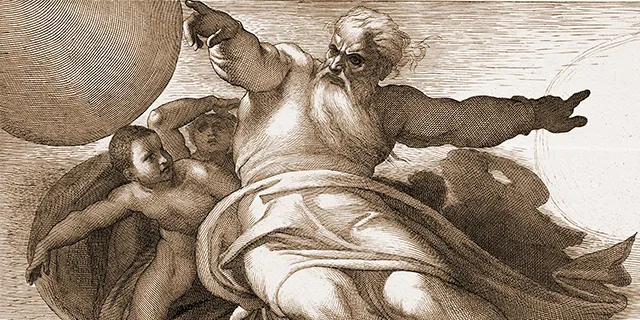
If you grew up accustomed to the kind of thing that passes for evangelicalism in the world of big box churches, where every worship service was a kettle of warm goop, and Jesus was your invisible sky-buddy, your first encounter with the preaching of John Piper—which your You Tube algorithm had somewhat rudely handed to you—was like a two-year-old taking a sip of bourbon.
Okay, I don’t know. The kid got up early, his parents had had a party the night before, and there was a glass with a little bit left over sitting on the coffee table. But we don’t really care how it happened because all we need right now is a freeze frame of the metaphorical reaction shot. It was like that.
That first encounter with big God theology was a true spiritual encounter. Something important was really there. Compared to the pabulum that was the usual menu item, that rib eye steak was really something. Compared to that paper cup with some room temperature tap water in it, the bourbon was startling and eye-opening. There are things like this in the world?
And if you happened to be a pastor, there were all sorts of ramifications—a decade’s worth of ramifications. What was your next sermon series going to be? What were you going to do about the make-up of your elder board? What was your wife going to think? Your oldest was almost kindergarten age, and what were you going to do about schooling for her? In short, you discovered you were living in a house with a badly cracked foundation, and you now knew you had to replace it, and you couldn’t move out of the house.
You were going to be busy for a bit. Your seminary education was an airplane that needed to be repaired, and it had to be done while you were still flying it.
So let’s call this what it is, which is a promising start.
Bigger and Big
Tiny god theology actually requires no application. This is a domesticated god, one who lives in the mezzanine of your heart. You consult him from time to time whenever you need a little pick-me-up, or a feel-good consult, but that’s about it. He never tells you to change anything. His priestess is your local therapist, who doesn’t tell you to repent either. She does agree with you that all those other people in your life need to change, and so the status quo is going on swimmingly. Except that everything still seems terrible anyhow.
Big God theology, by way of contrast, requires application. The God of Calvinism is never content to let you just sit there. He requires application, and that means change, and this is why following Him can be so tumultuous. Following Him for a little while is also tumultuous for that little while. So if the big God being preached is the God of the Bible, then this is what happens in the very nature of the case.
But the danger is this. There is a difference between big God theology and bigger God theology. Bigger God theology can be disruptive in your life simply by confronting you with a bigger God than the one you had before. Bigger God theology takes you up a few notches, and sometimes more than just few notches. But bigger God theology at some point . . . stops. By way of contrast, genuine big God theology never stops. We are always finite, and so there is always a further up and further in. There is always new territory that needs to hear the news about the rule of the Lord Christ.
“(For the weapons of our warfare are not carnal, but mighty through God to the pulling down of strong holds;) Casting down imaginations, and every high thing that exalteth itself against the knowledge of God, and bringing into captivity every thought to the obedience of Christ”2 Corinthians 10:4–5 (KJV)
It is not possible to have the heart of a Puritan and not want to do something about the cultural “imaginations” and the political “high things” that set themselves constantly against the knowledge of God. It is not hard to see these vain imaginations. They surround us on every hand.
Now the Puritans had a true big God theology. The people today who reprint the Puritans, on the other hand, limiting themselves to their devotional and doctrinal works, while carefully avoiding their political theology, tend to have a bigger God theology. The theology is bigger than the standard broad evangelical fare, but it still hesitates. It still holds back, and so we need to let some words of warning in Scripture bring us up short.
“Now the just shall live by faith: but if any man draw back, my soul shall have no pleasure in him. But we are not of them who draw back unto perdition; but of them that believe to the saving of the soul.”Hebrews 10:38–39 (KJV)
And no, I am not saying that this means disagreement about cultural engagement is a salvation issue across the board. The reason I am not applying “perdition” to everyone in this category is that I believe there is a real subtlety involved in the deception that has taken them in. This makes things more understandable, but no less problematic in the long run. We do already see leading evangelical figures who concerning faith have made a shipwreck, and this particular confusion was the issue. So I am saying that the warning means something, and that living by faith means going forward into the culture—even if forward means that Christianity Today sneers an editorial that finds your “conservatism” problematic and possibly idolatrous. At the very least, this passage is saying that living by faith and shrinking back from an unbelieving culture are inconsistent.
And so what are we to do in a day when many Christians are arguing for a principled shrinking back?
How This Morphs into “Retreat to Commitment”
So how does big God theology become bigger God theology? The arrival of big God theology certainly presents the devil with a problem. How does he deal with it? From the devil’s perspective, can anything be done about this? I am reminded of Screwtape’s advice to his nephew. “So, your man has become a Christian . . .” That is a Grade-A disaster, but all is not lost. But nevertheless, a true challenge is set for the enemies of our souls.
How can they insinuate boundaries for the no-boundaries God? How do they establish limits for the one who inhabits eternity? Remember that God is limited by nothing outside of Himself; He is bounded by nothing other than His own nature and character.
So the enemy’s task is to set boundaries for Him surreptitiously in the minds of His followers, and they need for these boundaries to not be established by His own nature and character. This means that Christians need to be convinced that the realities made manifest by the infinite God must not be applied to the realm of culture and politics because the infinite God has indicated to us somehow that He doesn’t want us to go there. He must be the one who said not to go there.
It is absurd for any Christian to think that rebellious man could successfully establish a no-fly zone for God. So we have to talk ourselves into believing that God is the one who did it. But God told us to preach the gospel to every creature (Mark 16:15). That would seem to include kings and those in authority (1 Tim. 2:1-4; Acts 26:27-29). This would have obvious implications for how they rule, would it not? So don’t we need to think this through beforehand? And then have a go at it?
The only way for an advocate of Big God theology to refrain from active engagement in the world of culture and politics is to maintain that this is the commandment of God. God must have told us not to go there.
But this is what the anabaptist tradition holds, and they have tried to hold to it consistently. Separate from the world. Let “the English” do their thing.
So the separatists among conservative Reformed must be doing one of two things. The first possibility is that they are trying to edge their way into the separatist anabaptist camp, and they are doing so inconsistently, in a herky jerky kind of way. How do you sidle away from the historic Reformed approach to cultural engagement and into separatism without anybody noticing? It is certainly challenging, That is one possibility.
The second possibility, and the one I think is actually happening, is that they really do want cultural engagement, but their idea of that is to be assimilated by the progressive left. They have bought into the vision put forward by the forces of secularism, the one that defines for us what winsomeness is supposed to look like. It looks like impotence, by the way.
They want the church to be digested by the Borg. We would not be digested entirely in that we would get to keep the steeples and the rainbow stoles. If we promised to be extraordinarily docile, they would even let us have a lady archbishop. And having brought up that particular wheeze, I can only say that there was one tiny glimmer of sanity in the choice. Having had male archbishops in dresses for so long, they have at least removed the drag element now.
But this digestion process must be done incrementally, because to go too fast would spook the donors, not to mention the rank and file.
An MLK Thought Experiment
I trust you all remember the MLK50 conference? That event was sponsored by the ERLC and by TGC. Still with me? Remember that one? And to date, as far as I know, these organizations have not apologized for any of that business.
So the thought experiment is this. What if we were to survey all the speakers at that conference in order to ask them what they would think of a huge evangelical conference, held on the 50th anniversary of Charlie Kirk’s death, commemorating his life and contribution to our cultural life? I believe that one word would show up an awful lot in their responses. That word would be idolatry.
In short, they would object strongly to people on the right doing anything like what they are doing on the left. And make no mistake. They are on the left, some of them wittingly and a number of others unwittingly.
When the Amish check out, they check out. When the third way evangelicals check out, they are just pretending to check out. They are simply hiding their political commitments under the warm approval generated by the broader secular zeitgeist.
So . . the Actual Failure of Big God Theology
So what it comes down to is this. The failure of Big God theology has been the failure to have a genuine Big God theology. Large chunks of the formerly Reformed world have more or less openly aligned with the left now. They are on their way out, and we should let them go.
Other sections of the Reformed evangelical world have instead become separatist, more anabaptist than Reformed, and they have settled down, content with a bigger God theology.
But the problem with this bigger God is that the longer you preach him, the more he shrinks. You can see evidence of that all around us.