

Introduction
So I have a few things that need to be said about me and the Talmud. Be sure to give me a minute to get warmed up.
But first, in order for you to understand what I am going to say, it will be necessary to grasp what can only be described as the thundering ignorance of those online voices that I will gather up together into a frothing bundle and call Sir Oracle.

According to Sir Oracle, I just love me some Talmud, and believe every word of it. I want to read my New Testament through a Talmudic lens. I have received my payment of 7,000 shekels from the Jews to do something or other, presumably nefarious. I have squandered my legacy through this inexplicable Jew-shilling of mine. I have decided to finish out my few remaining ministry years by dispensing Zionist-swill to the masses. I am viewing the world through my boomercon blinders, and so it is not surprising that I have now been supplanted and surpassed by the Young, Restless and Retarded, who are apparently the future, God help us. In the meantime, when I go home at night, I like to relax by dressing up like Caiaphas. Helps me to unwind. Or, at least, so the allegations go.
In the aftermath of my AmeriFest appearance, during which I said that there was some gold in the Talmud, I soon found myself in the middle of yet another bee swarm. Or, as one of my family members has put it, “my sweet spot.”
You always need to drive well in front of these people because they don’t believe in mud flaps. They don’t believe in Talmud flaps either. They do, however, specialize in flaps about the Talmud, and this is why you always need to stay out in front of them.
As an aside, one of the noticeable things about this latest warp spasm is that when hordes of the vermilion-pilled caught yet another round of the Jew Floo, and came after me over my fondness for Israel, Stephen Wolfe retired gracefully into the background, deciding to sit this one out. This is because Stephen’s catch phrase is “please do the reading,” a sentiment I agree with entirely, and as he has done a bunch of the reading in the magisterial Reformation, he knows good and well how utterly clueless the based Dufflepuds are being right now. Stephen knows all about what I am about to explain here below, although it might be impolitic for him to say anything about it at this point. The ignorati might take it ill, believing as they do that water is powerful wet.
So let me say something about historic Reformed theology and Jewry, in the first instance, and then go on to talk about how the objective nature of truth is at war with all these rank displays of what can only be called tribal truths.
Reformed Hebraists
One of the rallying cries in the Reformation was ad fontes—back to the sources. This is one of the reasons why the Reformers had in their ranks the leading patristic scholars of Europe, going back to the earliest sources of church history. They went back to the very headwaters of church history. And their desire to go back to all the original sources also meant going past the Latin Vulgate and into the Greek New Testament, as well going back to the Hebrew Old Testament. But going to the Old Testament meant, among other things, learning Hebrew. That meant learning Hebrew from the rabbis, and working through a bunch of Hebraic literature, the Talmud included.
And because of all this, the Roman Catholics of course accused the magisterial Protestants of “Judaizing.” But in doing this, the Reformers did not in any way compromise their Christian convictions. They believed, as all faithful Christians do, that the Jews had rebelled against the fact that their Messiah had risen from the dead, and that this error was grotesque. But this did not mean that the rabbis had missed how Hebrew grammar works. They still knew about that, for pity’s sake.
For example, Johannes Reuchlin was the father of Hebrew studies among Christians, and a forerunner of the Reformation—he was the Erasmus of Hebrew studies. He was the grand-uncle of Philip Melanchthon, and just prior to the Reformation he was a key figure in the “Reuchlin Affair” (1509-1510). There had been a movement among Roman Catholics to begin confiscating and burning Jewish books, the Talmud included. The emperor consulted with various experts about the propriety of this, and Reuchlin was the one who argued against doing so, understanding the great value of Hebrew studies for Christians. Martin Luther, author of that infamous pamphlet against the Jews later on, was on Reuchlin’s side in this and drew inspiration from him.
John Calvin cites rabbinic scholars throughout his biblical commentaries, and among the Reformed this was a standard sort of thing. He thought that the rabbis were blind when it came to the central point of their Scriptures, which would of course be the identity of the Messiah. But he also utilized their insights about the text at multiple points and places. Because he was a Christian, he was not shy about rebuking Jewish obstinacy. But because he was not a bigot or moron either, he was more than willing to acknowledge (and use) those places where they saw the text clearly.
[Speaking of Isaiah 7:14] “This passage is obscure; but the blame lies partly on the Jews, who, by much cavilling, have labored, as far as lay in their power, to pervert the true exposition. They are hard pressed by this passage; for it contains an illustrious prediction concerning the Messiah, who is here called Immanuel; and therefore they have labored, by all possible means, to torture the Prophet’s meaning to another sense . . . But it is a just reward of their malice, that God hath blinded them in such a manner as to be deprived of all judgment.”
John Calvin, Response to Questions and Objections of a Certain Jew, p. 51
So I agree with Calvin’s quote above, and I also think there is gold in the Talmud. I like how Calvin resorted to Jewish commentators freely, not caring what the anons thought about it. So I really don’t think there is any way that our current crop of Jew-haters can get out of this one! Okay, wait. There is one way for them to answer me on this point. They could use Grok to deck me out as a black hat Jew. This would serve, I am told, as a compelling argument in some circles.
Calvin’s successor, Theodore Beza, supported a return of the Jews to their historic homeland. Tremellius, one of the foremost Protestant biblical scholars of the 16th century, had converted from Judaism to Catholicism, and then on to Calvinism. He translated Calvin’s Catechism into Hebrew as an evangelistic outreach to Jews.
And because the Reformation era contained unstable souls—even before their love language of Internet clicks was invented—there were some who overshot in the other direction, as the “Hebraic” roots emphasis caused them to abandon Trinitarianism . . . with the Roman Catholics pointing and laughing and going, “See? See?” In response to these men who got the wobbles, Girolami Zanchi, another Reformed great, published De Tribus Elohim, a detailed argument for the Trinity from the divine names in the Hebrew Old Testament. For more on all this, check this book out.
Out of the major branches of Christendom, the Reformed stream has historically had the best ongoing relationship with the Jews, and it has been that way for doctrinal reasons. This has been done without compromise, and without any Judaizing, and took root centuries before the advent of dispensationalism. Again, no compromise. Christ was the Messiah of Israel, and He rose from the dead. There is no splitting the difference on that one.
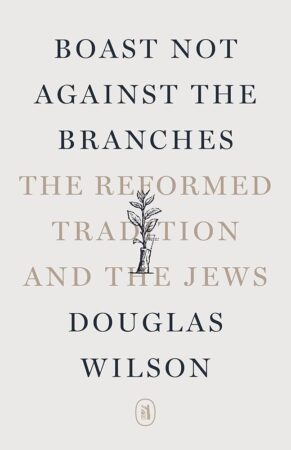
So I published a book this last year—Boast Not Against the Branches—that gathered quotations about the coming conversion of the Jews from Reformed writers in every century since the Reformation. I am not talking about no-name schlubs either—and please note my use of the Yiddish term schlub, as my Jewish handlers like it when I do that. Rather I am referring to men like Perkins, Bradford, the men behind the Westminster Larger Catechism, Sibbes, Owen, Durham, Poole, Mather, Rutherford, Henry, Boston, Newton, Doddridge, Hodge, Dabney, Haldane, Spurgeon, Brown, Berkof, Bahnsen, Murray, et al. You know, men renowned for their captivity to the post-war consensus, a war that was conducted centuries after most of their descendants were born.
In fact, the central point of my book was to demonstrate that this historic Reformed stance regarding the Jews owed nothing whatever to any kind of secular liberal consensus that formed after the Second World War. Nothing whatever. And speaking of nothing whatever, that was the response I got from Sir Oracle, he who decided it was time to channel the sound of many crickets.
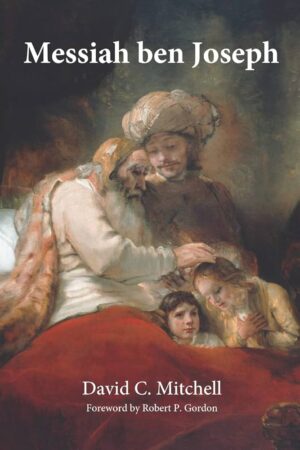
If anyone would like to investigate the sort of gold I was referring to, let me refer you to two books by David Mitchell, both of which can be found at Amazon. The first is Messiah ben Joseph. As I have said elsewhere, there are places in this book good enough to melt your face. Another great book of Mitchell’s is Jesus: The Incarnation of the Word. These books are a wonderful example of a Christian writer who has a thorough mastery of Jewish texts, and who writes books that lead straight to the gold I was talking about.
And by “gold,” of course I mean the Lord Jesus Christ.
Tribal Truths
When issues like the historicity of the Holocaust are raised, it is common among the YRR to sneer at what they call “Holocaustianity.” They want to know what particular historical facts they have to agree with in order to be accepted as orthodox, “as a brother in Christ.” They want to be treated as fellow ministers of the gospel despite their historical revisionism. As we continue to fight the commies, they want a place in the war room, and they complain loudly when they are excluded over a mere difference of historical “opinion.”
But this has nothing to do with historical details, and everything to do with the reliability of objective truth. The issue is the nature of Truth, not this fact or that one.
Suppose that during a presbytery exam (don’t ask me how it could come up, just work with me), a candidate revealed that he thought North Dakota was located due south of South Dakota. This would not reveal a mere difference of opinion over “geography.” The issue would not be geography—and we would be dealing with two possibilities. The first would concern the candidate’s level of education. In this scenario, he would be a woefully ignorant person, and not to be ordained for that reason. The second possibility would be that he was a child of our relativistic generation, entirely conquered by the spirit of subjectivist postmodernism. By this I mean the spirit that flattered him into thinking that North Dakota should be wherever he wanted it to be. How does this location for North Dakota make you feel?
This is how reason works when people have tumbled into the Void. Lewis describes it wonderfully in Perelandra.
The Unman “showed plenty of subtlety and intelligence when talking to the Lady; but Ransom soon perceived that it regarded intelligence simply and solely as a weapon, which it had no more wish to employ in its off-duty hours than a soldier has to do bayonet practice when he is on leave”
Perelandra, p. 128
You can see the rot of identity politics working its way through the right wing when truth is defined and utilized as that which serves the interests of the tribe.
Here, let me illustrate. Sir Oracle was outraged—furious, I tell you—at my application of Candace-logic to the matter of the USS Liberty, where 34 sailors died in an Israeli attack. Any sort of historical revisionism is an evil not to be borne, even if it was being employed as a hypothetical example to illustrate how Candace-logic works. To speak in such a way is to desecrate the memory of those heroes who were killed in the attack, or so the indignant reaction goes.
But this is the same bunch of people for whom wholesale revisionism about the entirety of World War 2 is completely fair game, in which war around 80 million were killed, mostly civilians. Their memories and graves are not desecrated, not at all. How could the mere asking of questions desecrate anything? To which I say, fools and blind—the standard with which you judge you shall be judged.
It is vile and evil and wrong and TRAITOROUS even to suggest that LBJ might have been in the wrong in any way with regard to the Liberty incident. A bit arbitrary, but okay, fine. But why do you then defend people who argue that we and our resources were entirely on the wrong side of World War 2? Ginormous revisionism for thee, and no putt-putt revisionism for me?
So actually, something else is going on.
Truth for them is whatever gave them an opportunity to go after their adversaries, in this case me. Truth for them is nothing more than a clean shot at a foe. Any rock is good enough to throw. People who think it is copacetic to throw stones at Erika Kirk because Candace had another dream are not people to be trusted when it comes to clearing smoke away from the 6-Day War, or World War 2.
You know how I know that David Irving is wrong about the Holocaust? I had a really vivid dream, people. A little angel came and stood on the foot of my bed, and said some devastating things about Irving. And about Candace too. The angel asked me, with withering sarcasm, why I was paying any attention whatever to Candace’s dreams. Hasn’t the 21st century taught you anything? You are supposed to follow your own dreams.
So my issue is not about this particular truth claim or that one, which is something that could be done by a genuine revisionist. If some dispassionate researcher a hundred years from now discovered that the number of Jews murdered in the Holocaust was 300,000 shy of the generally accepted 6 million number, that would certainly not rock my world. Truth is truth, whether the actual number was lower, or 300K higher.
But what we are dealing with here in our day is a form of tribal truth. This concept of the truth is whatever advances the cause of the tribe, whatever that tribe happens to be. The fuel that this sort of truth runs on is outrage, and because the signal was given to be outraged, outrage ensued.
Once the car is fueled up with premium outrage, you can drive it in any direction you want.
So the issue is not a particular historical claim being inserted into the essentials of the faith. The issue is whether any claims are rooted in objective reality, and that is an issue where the faith stands or falls. So Christian truth is based on the fact that Jesus rose from the dead in history, and not on the basis of whether your based entourage and affinity group was flattered or offended.
Last Thing, Promise
I am a generalist, which means I am reasonably well-informed about a lot of things. But being reasonably well-informed is not the same thing as being an expert, not even close. I am no expert on the Second World War, or on the history of Gaza, or on the USS Liberty, or on the Talmud, or on the shotgun offense, or on the twelve-bar blues. Despite this lack of expertise, I do have views on all of those topics. I am not ambivalent or apathetic. I have opinions.
And here is where my expertise kicks in. I am something of an expert on what I think, and on what I have said. It is here that I claim my laurels. I know what I said, and why I said it. I am an expert on said opinions. I walk around all day every day as my very own primary source.
And the reason I am so dismissive of Sir Oracle on all his other historical crotchets is this. It is not that I am prepared to match my knowledge of Gaza against his, or his knowledge of Patton’s troop movements against mine. No, my method is much simpler. I look at how he represents what I have said, a subject in which I am conversant, and from that vantage point make a determination whether or not to trust what he says about anything else. And it is not going well for him. When it comes to representing truths I know about first hand, he couldn’t hit the ground with his hat. He couldn’t find his own rear end, even if we gave him fifteen minutes and allowed him to use both hands.
To this they puff and blow. They say that I am confusing and contradictory. They say that I can’t make a point without making it wet and slippery. They argue that I am a tricksy-man with words, and that a dense fog bank rests upon all my arguments. Sorry. I know something about that also. I have been working with words for over fifty years now. I make my living with words. I have had editors who have not felt the need to flatter me. And I have heard from countless readers who somehow did not notice the fog bank.
I suggest that the fog—which is admittedly dense—is coming from somewhere else.