

Introduction
It is getting to the point where you can’t really tell the players without a scorecard. There are so many things going on, and all at the same time, and various theologies are woven in and out of them, and then the Internet circulates all of these items at a high rate of speed—as sort of a moron collider, if you will.
If today’s post meanders somewhat, I am sure you will be most understanding.
Some Background

The Iranian regime, currently on its heels, is governed by Shia theology, and by a particular subset of that theology to boot. Most Muslim countries are Sunni Muslim, but this Shia state is distinguished by its teaching that, after the time of Muhammad, there were 12 imams in succession, the last of whom was born in the ninth century A.D., but who was spirited away by God and is still alive somewhere. His name is Muhammad ibn al-Hasan, and he will come back at the end of days, along with Jesus Christ, leading up to Judgment Day.
In the meantime, certain Democratic lawmakers are concerned about the impact of another set of theological emphases in our armed forces. A couple of dozen congressmen have asked the Department of War to conduct an investigation into whether any of our troops were being told by their leaders that Donald Trump had been commissioned by God to go ahead and light the Armageddon fuse.
In addition, recent comments by various administration officials (like Mike Huckabee, say) have indicated that they believe that the very existence of the state of Israel is grounded in the promise of the land that God gave to Abraham in Genesis 15. It is quite true that many evangelicals in North America believe that the formation of the modern nation state of Israel in 1948 was a fulfillment of biblical prophecy, and that it started the “end times clock” ticking again. And to make everything a little bit more festive, an older video from a few years back shows Pete Hegseth talking about the building of the Third Temple. The challenge with that topic is that the site where the Temple would have to go is currently occupied by the Dome of the Rock, a Muslim holy spot . . . and any attempt to demo that Dome to make room for a Temple would be sure to get many Muslims to the point where they were talking excitedly.
Instead of these arcane religious motivations, the congressmen filing this complaint appear to want our wars to be fought in the secular manner to which we have all become accustomed, which is when everybody goes off to die for no particular reason. Either that, or gas prices.
How Does Dispensationalism Relate to All of This?
Dispensationalism is the predominant theological system among evangelicals in North America. I am not a dispensationalist, not even a little bit, but it will be my goal in this section to give them as fair a shake as I can. Let’s see how I do.
Dispenationalists, like all conservative Christians, believe the Bible, accepting it as God’s holy Word. The difference between them and other groups is that they have a distinctive hermeneutic, meaning they have a distinctive approach to the interpretation of Scripture. Charles Ryrie, a leading dispensational theologian, put it this way—”literal unless absurd.” When other conservative Christians interpret a passage typologically, or metaphorically, or spiritually, the dispensationalist tends to view this as a dangerous form of “explaining away” or “spiritualizing.” And to be fair to them, dispensationism rose to prominence in America during those decades when theological liberals were actively engaged in explaining everything away. So the dispensationalists actually had a point, and their stubbornness over this point is one of the reasons why there are still millions of evangelical believers in America.
I would rather have millions of evangelical believers in the Bible, even if their theology included some odd takes from the book of Revelation, than I would want 15 or 16 believers, whose theology was, as Mary Poppins would say, spit spot.
Now with this literalist hermeneutic, it was natural that dispensationalists would interpret the many passages in the Old Testament that prophesied a glorious future for Israel as being about the literal nation of physical Israel (“literal unless absurd”). Thus, when Israel was reestablished as a nation in 1948, it was a cause of great excitement in dispensational circles. A biblical generation is 40 years, and that meant that the Lord was going to return in 1988 (according to the very popular dispensational writer Hal Lindsay in his book The Late Great Planet Earth). Now that didn’t happen, but the system has proven somewhat flexible when it comes to adjusting dates.
And so this is one of the central reasons why evangelicals tend to have a default setting in support of Israel. However and whenever the world ends, Israel is going to be right in there, and very much a part of it.
Conquered, Not Stolen
Some of the edgelord bros have recently been splashing about, arguing that Israel does not actually “have a right to exist.” The argument is that they can keep what they can defend, but that they have no a priori right to exist. This is fair enough, but only if we apply it across the board. Israel does not have a right to exist in the same way that white people don’t, and America doesn’t, and the Confederate States of America didn’t.
The progressives like to say that no one is illegal on stolen land, but if borders are just a social construct, there is no such thing as stolen land. In response, conservatives have recently taken to saying “conquered, not stolen,” which ties in with the earlier “right to exist” point. See the clip above, which got filmed somehow.
In the First World War, the Ottoman Turks, who had ruled the Middle East for centuries, bet on the wrong horse by throwing in their lot with Germany. In the course of the war, the English and the French had made deals with various groups—”help us in the war effort, and we will repay you with land.” Having won the war, the Allies wound up controlling the Middle East. Lawrence of Arabia had made deals with the Arabs, and the British kept their bargain with them after the war. The British had also made a comparable deal with the Jews, which Winston Churchill brokered after the war. The territories which were dispersed to these different groups were in fact spoils of war.
Since that time, Israel’s territory has grown as they have repelled various attacks, and taken more land in wars of self-defense. Conquered, not stolen. I understand these things in the light of a biblical worldview, which is not the same thing as believing that the war in Gaza is a fulfillment of prophecy.
Third Temple Challenges
Observant Jews have been praying for the restoration of the Temple for thousands of years. Solomon built the first one around three thousand years ago, which was destroyed by Nebuchadnezzar in 587 B.C. When the Jews returned from the Babylonian exile seventy years later under Ezra and Nehemiah, they rebuilt the Temple, and it was kind of pitiful compared to the first one. Centuries later, Herod the Great, a very industrious. builder, conducted a massive remodel project of this Second Temple, resulting in the Temple that is a New Testament centerpiece. Jesus predicted that with this Temple not one stone would be left on another, and that this would all happen within one generation. This came to pass in 70 A.D. when the Romans sacked the city and destroyed the Temple. Since that time the Jews have been wandering exiles. Their sacred texts presuppose a functioning Temple, but they have been without one for two thousand years, meaning that they had to make significant adjustments to how they interpreted and applied their Scriptures.
Christians have the same sacred texts in what we call the Old Testament, but we believe that the Temple was replaced by the Christian church, the Temple of the Holy Spirit. And because Jesus was the final and complete sacrifice, there is no longer any need for the blood sacrifices that would be offered up in a renewed Temple. Dispensationalists share this conviction with other Christians, but that means that when this angular prophetic bit about the rebuilt Temple happens, they are going to have trouble fitting it in to the rest of their theology.
So a rebuilt Temple, prayed for by the Jews, and predicted numerous times in prophecy seminars by the dispensationists, would actually be a huge embarrassment for everybody if it ever came to pass. The Temple as an unrealized ideal is one thing, but an actual Temple would require a restoration of the priesthood, and a resumption of the animal sacrifices. For the Jews, this would be awkward because Talmudic Judaism has developed into something that does not require a Temple. And a rebuilt Temple would require a host of other recovered things, like the Sanhedrin, like accurate genealogies for priests and Levites, like a recovery of the Urim and Thummim, and so on.
And dispensationalists are going to have the challenge of fitting the whole apparatus into the book of Hebrews. The issue for them will not be whether the sacrifices are happening, but whether or not God is accepting them. If they say no, then what’s the point? If they say yes, then didn’t Christ die once for all?
Enter Insurrection Barbie and Chesterton’s Fence
A week or so ago, Insurrection Barbie made a splash with this article, one I commend to you. It is entitled “The Long Game and the Conservative Right.” She makes a lot of trenchant observations, and I believe she is exactly correct that there is a movement underway to discredit and discard the evangelical base of the conservative movement in American politics.
Chesterton spoke of the reforming zealot who comes along and says, “I don’t see the use of this fence. Let’s tear it down.” Chesterton’s rejoinder is that he won’t let the reformer tear down the fence until he does see the use of it. Revolutions are destabilizing things, and there have been many occasions of exuberant demolition when everyone discovered—to their dismay and sorrow—what all those fences had been for. Now we have to deal with cows all over the road.
Those who have been reading my stuff for some years know that Abraham Lincoln was not my favorite president. He was, in my view, a constitutional disaster. And so why would I oppose the mob that was proposing to blow up the Lincoln Memorial? This principle of Chesterton’s fence is why. After they blow up Lincoln, some naifs would be astonished when they discovered that the former president was now going to be replaced by a statue of Che Guevara.
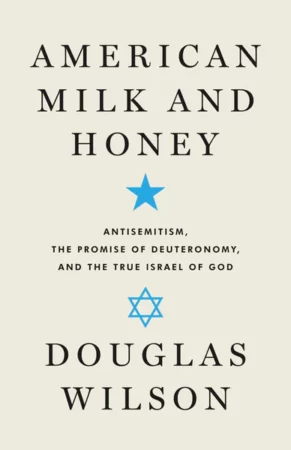
Dispensationalism is the majority report in North American evangelicalism, and it has a peculiar carve out for the Jews. Covenant theology, broadly speaking, is the alternative to dispensationalism, and covenant theology is supercessionist—which means that we believe that the Church is the true Israel now. Insurrection B points to this fact, but we also need to note the fact that there are two kinds of supercessionists—hard and soft. All of them believe that the Church is Israel now, but the soft supercessionists—which would include the strong majority of covenant theologians—also have a carve out for the Jews. It is a very different carve out than the one the dispensationalists have, but we do have one. What it amounts to is that we believe that God still has a providential plan for the Jews “according to the flesh,” a plan laid out for us in Romans 11.
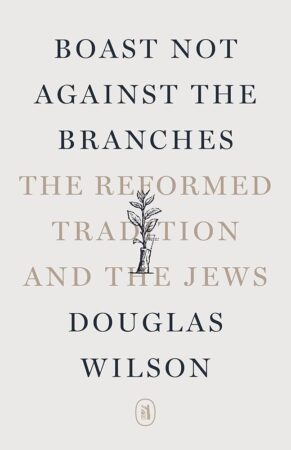
Hard supercessionists believe that the Jews are now just another tribe of men, with no particular promises concerning them at all. Now hard supercessionism does tear down some fences, and I don’t believe hard supercessionism is a heresy at all . . . but it does tear down some fences. And because of this, no one should act surprised when we turn around to find antisemitic cows all over the road, each of them with a podcast. I believe that responsible hard supercessionists—and there are many—do have a special responsibility to help us deal with the consequences of the missing fences.
Insurrection Barbie is quite correct that what we are dealing with is an attempt to replace the evangelical base of the Republican party with another very different base—this one describing itself as a lot more based as a base. But this “based” base is actually an alien import, and not native. It is what happens when you have theological open borders. Catholic integralism is actually radically distinct from the Protestant consensus that shaped America.
As evangelicals start to wake up to this threat—and it is a threat—they need to take care that they don’t react to it in a slapdash fashion, calling anything a form of integralism if it varies from John Hagee’s blood moon hand waving.
Life is more complicated than that. And as we watch events unfold in the Middle East, one of the certainties ought to be—in a time filled with uncertainties—that Donald Trump is not going to inaugurate a fiery Armageddon. There will be more on this, as events warrant.