

Introduction
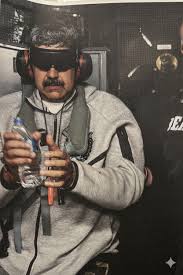
The raid that captured Nicolás Maduro and his wife was a raid that raised a host of questions, but also answered a bunch of them. It was also an attack that got a lot of the chimps jumping, and they don’t think the questions were answered, not at all.
What remains for us to do is to sort through the pieces, and perhaps come to a few tentative conclusions. Keep in mind that our assessments may vary, depending on which aspect of the operation we are talking about. One might be enthusiastic about some aspects of Operation Absolute Resolve, as I am, and also dubious about other portions of it. Read on and see, my friends.
A Stunning Accomplishment
The first thing to note is that the craft competence was stunning. a competence that was displayed throughout the entire operation. Nothing succeeds like success. Pete Hegseth has made it a point to restore a culture of lethality to the military, recovering the warrior ethos, and it turns out that this is the kind of emphasis that troops actually need in order to function well. A lot of people who dismissed Hegseth as a feather-weight Fox News personality owe him an apology—which I doubt will be forthcoming. The military does not exist in order to function as a lab where DEI policies can be celebrated and test driven all at the same time. That is not their function. Their purpose, as I believe Rush Limbaugh once put it, is to “kill people and break things.” It is plain that a return to that kind of mission focus, led by Hegseth, is paying dividends.
Such success is not something that is automatically guaranteed, just because the a well-funded US military is involved. Think of the withdrawal from Afghanistan. Go back a generation and think of Jimmy Carter’s disastrous attempt to rescue the hostages in Iran. You should also think of dudes in dresses, pretending to be women, while also pretending to be admirals. Without decisive and clear leadership, our military is fully capable of spastic operations that soldiers and sailors have quite a colorful and mostly blue way of describing—one that I will not repeat here. But they know it when they see it because they have frequently seen it before.
In stark contrast, the execution of this plan was truly impressive. That includes the fact that we had men training and preparing for this over the course of months, and no leaks. And then, after that, when the green light was given, the whole thing went off flawlessly, with no American fatalities, and with Maduro in custody within minutes—and soon to be tried in New York state. I have watched a few logistical explanations of what had to come together for this operation to succeed, and what they had to be ready for, and the whole thing is simply astonishing.
And it is this competence, and willingness to use it, more than anything else, that enhances America’s prestige in the world, and makes the use of force much less necessary in the future. So that is one thing. This was an impressive feat. So hats off to everyone involved.
Precision Strikes and Endless Wars
A big part of the populist revolt against the neo-cons was the fact that people got tired of endless wars, punctuated here and there by nation-building, and then followed by more endless wars.
An assumption that was foundational to these “endless wars” (that we got tired of) was the whole ideal of nation-building. American presence, American money, American plans, American constitutional stuff, American social mores, including the immoral ones, American infrastructure, and American know-how, were all thought to be a sufficient basis for building Jeffersonian democracies out there in the sand. Or deep in the jungle somewhere. And what that hubris did was feed the indigenous resistance, and there we were, holding yet another tar baby. And by “tar baby” I mean the vain enterprise of trying convince a bunch of people who had grown up in Badakhshan that they had actually grown up in wealthy suburban neighborhood in Kansas City.
So what Trump’s base had gotten tired of was quagmires. Like Iraq was. Like Afghanistan was. They were tired of military interventions, followed by the apostles of democracy trying to accomplish things that secular wisdom simply cannot accomplish.
What they are not tired of would be decisive military action that serves American interests, without those actions bogging us down in endless conflicts. Examples would be the strike on Iran’s nuke facilities, or the bombing of Boko Haram in Nigeria, or this latest action against Venezuela. These are all examples of Teddy Roosevelt’s “big stick” approach, and I am pretty confident that none of this is rattling the confidence of Trump’s base. What would rattle them, and rattle them badly, would be a reprise of anything like Afghanistan up through that debacle of an exit. They are not against the use of force, in other words. They are against the use of force as a means of imposing a neo-con gospel on the world. The fact that force is involved does not automatically mean that it is a neo-con venture.
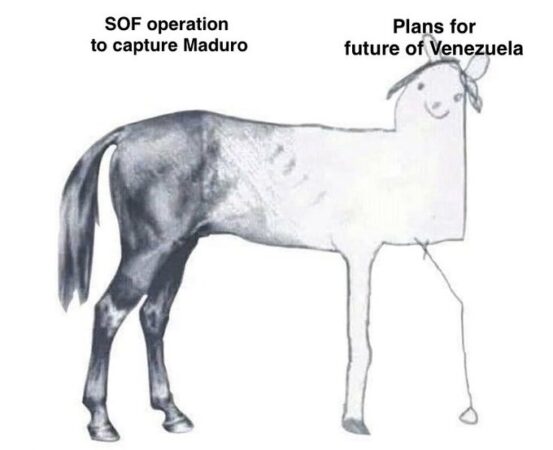
But the nervousness that does arise in sectors of Trump’s base is understandable—the fear is that any military action could be the preamble to a yet another attempt at nation building. There is a certain moral plausibility in Colin Powell’s appeal to the Pottery Barn rule—”you break it, it’s yours.” An illustration of how this implied pressure works is seen in this meme that Jonah Goldberg just retweeted.
But the future of Venezuela should be up to the Venezuelans. That is not our circus, not our monkeys. We are only responsible for left side of that horse. The only thing that matters is whether or not the state of affairs in Venezuela now is objectively better for American interests than it was before (which won’t be that hard). All we have to do is keep embargo pressure on to ensure that they pay our oil companies back, hold some free and democratic elections, and then we go away.
On second thought, we should insist on having some American poll observers there so that they can come back and tell us what a free and democratic election looks like. Not like Fulton County, in other words.
Changing the Channel
Donald Trump has remarkable abilities when it comes to managing the topic of conversation. All of a sudden we aren’t talking about whatever it was we were talking about before and are now talking about Venezuela (I don’t even have to check anymore). Trump decided to change the channel we were all watching, and now we are watching Season 1 of this new show.
There are, of course, a few exceptions. Those people who spend all their time watching the Jew channel are, as it turns out, still watching the Jew channel. Trump attacked Venezuela because the Jews made him do it apparently. It all becomes perfectly clear if you think about it long enough—that is, if you think about it long enough and about nothing else.
But for all the normal people, those without the Jew Floo, Trump decided we had spent enough mental energy on Somalian daycare centers in Minnesota, and so he drew our attention elsewhere. This is not because the Somalian travesty doesn’t need to have a horde of prosecutors unleashed on it, but rather because that end can be more easily achieved once the subject has been changed. The daycare centers made enough of a splash that it will be attended to, and the fact that we are now on the Venezuelan channel means that the left cannot use their media machine to mute the impact of the fraud story. You know how they do—running human interest stories about how a Somalian teen overcame hardship and bigotry to go on to carve a cure for cancer out of a bar of soap. And how he then went on, together with his Somalian buddies, to build the great state of Minnesota.
The fraud was exposed, and prosecutors should go after it. We don’t need to hear about it until the indictments are announced. We can talk about Venezuela to occupy ourselves in the meantime.
Swagger, Hubris, and the Honor of God
This point is actually the biggest issue for me, and the area of my greatest concern.
It was pointed out a number of times by the president and administration officials that “no other country” could do what we just did, and look at us go. But this reminds me of the wise football coach who forbade his players from engaging in touchdown celebrations. He said that he wanted them to act as though they had been there before.
I don’t object to this “no other country” point being said out loud because it is untrue. I believe that it is manifestly true. But I also believe that it is manifestly obvious, and to point it out yourself takes a good amount of the shine off. It does not augment anything worthwhile, and invites a spirit of hubris to settle in.
“Let another man praise thee, and not thine own mouth; A stranger, and not thine own lips.”Proverbs 27:2 (KJV)
This wisdom applies to kings as well as to ordinary citizens. King Herod was struck by an angel of the Lord because he did not give God glory after a successful political speech (Acts 12:23). How much more should gratitude to God be evident after a marvelous military success like this one?
I mentioned the disastrous attempt by Jimmy Carter to rescue the hostages from Iran. That mission failed because of an unexpected sandstorm, mechanical failures in three of the helicopters, coordination challenges, and a collision on the way out after the mission was aborted. In short, the mission was what technical analysts would call “snake bit.”
And in this mission, it is clear that everything went right. And so far with these foreign policy exploits, Donald Trump has his mojo working. That’s all well and good, but in missions like this, a hundred and one things can go wrong . . . the kind of things that the planning and training could not possibly anticipate. This is a time when it is most important to give the glory to God, and not simply to a military that is the “best in the world.” It is the best in the world, and part of being the best is to honor the God of Heaven.
“I returned, and saw under the sun, that the race is not to the swift, nor the battle to the strong, neither yet bread to the wise, nor yet riches to men of understanding, nor yet favour to men of skill; but time and chance happeneth to them all.”Ecclesiastes 9:11 (KJV)
Time and chance happen to them all, and God is the Lord of time and chance. It doesn’t take much for mojo to turn into snake bit. For all the things that didn’t go wrong that could have, give glory to God. For all the things that went right, let the glory of the action itself do all the talking.
Stuff Trump Says
In the news conference that followed this attack, Secretary Rubio spent his time talking about how President Trump is a man who means what he says. He doesn’t just talk and blather and posture like most politicians do. He acts, and when he acts, he does so decisively.
Now this is quite true . . . but only within a certain range. He threatened military action against Iran in order to vaporize their nuclear capacity, and then he acted. He threatened Maduro, giving him plenty of opportunities to climb down, but then he acted. Swiftly and decisively. He does take action, and he does act more decisively than the standard-issue politician.
But he also says other stuff that doesn’t get acted on at all.
One must also remember—musn’t one?—that Trump also said that we were going to turn Gaza into a fabulous resort, famous for its umbrella drinks. This sort of off-the-cuff madness also has a point to it, of course, being an “art of the deal” sort of thing. It is guaranteed to keep everyone off balance. It is the kind of thing that makes a bunch of neighboring Arab states say gaakkk! right before they offer an alternative plan.
I would put Trump’s comment that we would be “running” Venezuela for the time being in this off-the-cuff category. I would put his comment that the American oil companies that had their resources stolen from them in the other category. He clearly means that. And if one has trouble telling the difference between various Trump statements, I would suggest obtaining a top secret decoder ring. Either that or watch him closely for a bit.
Current Legalities Are Not the Constitution
When it comes to the constitutional issues, and the actual governmental situation we are in, this is all quite a jumble.
According to the lawyers, this is all perfectly legal. We did the same thing with Manuel Noriego of Panama a while ago under Bush. Juan Hernández, former president of Honduras, was extradited and charged with drug crimes, and convicted under the Biden administration. Interestingly, Trump then pardoned him. And quite apart from the recent drug wars, America has a long history of messing around in Latin America. We have gone down there with troops multiple times. It’s just what we do.
But the War Powers Act is not the same thing as the Constitution. Saying it is perfectly legal is not the same thing as saying that all of this ought to be perfectly legal. Our contemporary legal structures and procedures are not really the same system the Founders had in mind. When Richard Rorty said that truth is whatever your contemporaries let you get away with saying, the relativism embedded in that is immediately obvious to thoughtful Christians. We ought to have the same suspicious attitude toward our Jenga tower of legal precedents and convoluted forms of reasoning.
With that said, it needs to be recognized that one of the besetting sins of mainstream conservatism is the failure to recognize how much of our old constitutional order is a dead letter, and has been for a long time. Those parts that are still alive and kicking are those that have been woven into our unwritten constitution—that is, the hearts and minds of the people. The First and Second Amendments would be a case in point. They are still alive because everybody thinks they are still alive. That thinking is what I mean by the unwritten constitution. The Ninth and Tenth Amendments would be examples of the dead letter parts.
But then, assuming this state of affairs to be the case, what should a duly-elected president who understands this, do? Well, he needs to play cards with the hand he was dealt.
So with that said, out on the surface, we had never recognized Maduro as the legitimate head of state there, and this was also true. Our stance had always been that he was the kingpin of a drug cartel, one that had seized functional control of a country. That was also true, and was Trump’s “appealed to” reason for taking this step . . . but I think a lot more is going on with this situation than meets the eye. The drug-running issue is a real issue, and it is right there on the surface, but there are other things going on under the surface.
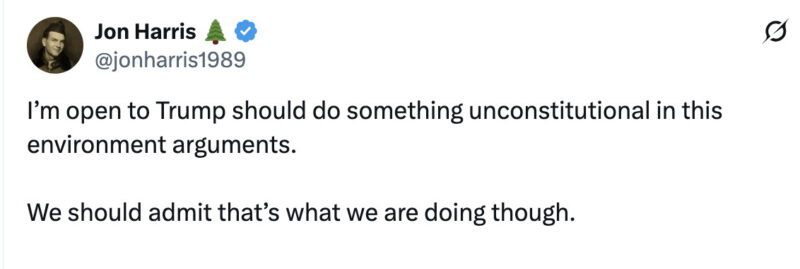
So I generally agree with Jon Harris’ sentiment noted above, but would want to qualify his last statement, where he says that we should “admit what we are doing.” If this is not just a battle with a Latin American drug lord, but is also a significant part of the battle with the American deep state, as I suspect it is, then we should let things play out. After all the pieces have fallen out of the sky, we should then admit what it was that Trump was doing.
Sorry to be so cryptic, but there it is.
Empires and Hegemons
The United States is not an old-style empire. It is not as though we win wars, claim territory, and then demand tribute. That’s not our style. But our economy, which dwarfs the economies of other nations, and our trade policies, whether sensible or stupid, play a dominant role pretty much everywhere. So I would argue that we are not an empire proper, but we are a hegemon. We are what would be called in the Bible a “great nation.” And in that role, we do in fact throw our weight around.
The Monroe Doctrine, which does go back to the time of the Founding, places a big “keep out” sign on the Western hemisphere, with that message intended for any other nation that was tempted to encroach across a few longitude lines. In that sense, this move is a significant blow to China, which was wanting to use Venezuela as a place to wield significant influence in our hemisphere. In terms of a robust application of the Monroe Doctrine, this was a deft move.
Conclusion
In brief, looking at this whole thing, for the most part I like what I see. But I also recognize that I am only seeing a fraction of what is happening. And by this, I do not mean that I am only seeing a fraction of the details. Rather, I mean that we are only seeing a fraction of what all these details mean. There will be consequences to this action—and not unintended consequences either—that have nothing to do with the price of fentanyl.
And in the meantime, much greater care should be given when it comes to thanking God.