

Introduction
In the year 2009, an army psychiatrist named Major Nidal Hassan shot up an army base, killing 13 people at Ft. Hood. After a death sentence was pronounced a few years later, and after years of automatic appeals and legal wrangling, the case has finally come to a termination point. The execution of Hassan is now slated for early December. The thing that made waves about the case is the fact that the Pentagon has announced the possibility that the event will be public, and public in a big way—it could be live-streamed.
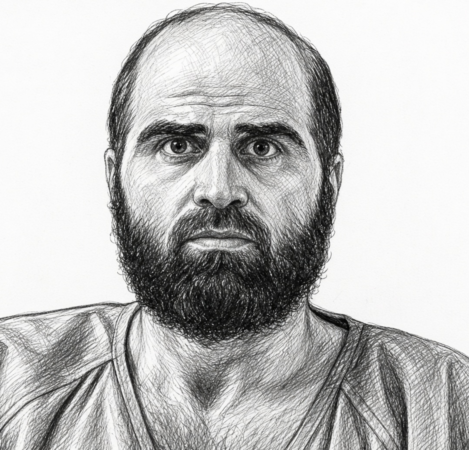
This being a new angle, and totally unanticipated, all our solons and pundits were suitably consternated. What are we supposed to make of something like this? Moreover, what are Christians to make of it?
Whenever Christians are confronted with a puzzler like this, our first reaction should always be a simple one. What does Scripture teach?
First, What We Should Not Be Discussing
The point is not whether Hassan deserves to be executed. He most certainly does, and the only travesty about that aspect of the affair is that it has taken so long.
God told Moses on Sinai “thou shalt not . . . “ what? A simplistic approach to this question is content to appeal to the surface language of the King James . . . “Thou shalt not kill.” What’s the problem with taking this as an across-the-board prohibition?
Well, the problem is that this prohibition is found in the Ten Commandments, in Ex. 20, and in the very next chapter, Ex. 21, we find a law that mandates capital punishment for cases like Hassan’s.
“He that smiteth a man, so that he die, shall be surely put to death.”Ex. 21:12 (KJV)
The Decalogue is clearly prohibiting murder, and not killing per se. Scripture is equally clear that when a man murders another man, it is the magistrate’s responsibility—after a just trial—to kill that man. The first killing is a murder and the second one is not.
“Whoso sheddeth a man’s blood, by man shall his blood be shed: for in the image of God made he man.”Gen. 9:6 (KJV)
And if someone resorts to the antinomian chestnut of “but that’s in the Old Testament,” listen to what an apostle of the new covenant had to say about his own case.
“For if I be an offender, or have committed any thing worthy of death, I refuse not to die.”Acts 25:11 (KJV)
He also taught us in the book of Romans that the civil magistrate does not bear the sword for nothing (Rom. 13: 4). The sword is an instrument of *death*—God did not commission the magistrate to spank evildoers with the flat.
So capital punishment is lawful and right, meant to deter evil. When justly administered it will have this effect, no matter what testament you are in.
“Because sentence against an evil work is not executed speedily, therefore the heart of the sons of men is fully set in them to do evil.”Ecc. 8:11 (KJV)
But Public?
A number of people who ordinarily support the death penalty were caught up short by the announcement about the event being live-streamed. Take the piece that my friend Peter Hitchens recently wrote for a great example. The reasoning is cogent, as one expects from Peter, but before getting into how this might be done poorly and how there could well be unintended effects (which is what the objection amounts to), I do want to grant the possibility—and discuss it in its due place.
But at the same time I want to anticipate that discussion with my foundational argument.
Under biblical law, executions were public. When an execution occurs, society has decided to kill someone. It is not to be done in the heat of the moment, but only after a fair trial. It is not to be performed at the behest of a ravening mob. It is to be cool, dignified, and judicial. It is one of the most solemn things that we could do. And since society has decided it is necessary to kill someone, it ought to be done with our eyes open.
Whatever arguments can be brought against public executions, therefore, are arguments that would be equally valid against every execution mandated by Scripture. Achan was executed in the presence of all the people (Josh. 7:24). The woman guilty of sexual fraud was to be executed in front of her father’s house (Dt. 22:21). Not only so, but witnesses in a capital case not only had to testify against the defendant, but also had to participate in the execution if he was found guilty (Dt. 17:7).
In the New Testament, the divine judgment fell on Ananias and Sapphira in front of everybody (Acts 5:1-11).
Agency and the Image of God
In his case against “humanitarian” punishment—that is to say, therapeutic punishment—C.S. Lewis argues that the older retributive approach to punishment granted to the condemned criminal the dignity of agency.
“To be punished, however severely, because we have deserved it, because we ‘ought to have known better’ is to be treated as a human person made in God’s image.”
C.S. Lewis, “The Humanitarian Theory of Punishment”
The criminal is a man, and therefore responsible for what he had done. He was not “a case,” or a set of conditional reflexes that needed to be taken in hand by trained professionals.
This is why I think we should resist methods of execution like lethal execution, the kind that resulted in the recent botched execution in Tennessee. And incidentally, while on that subject, I don’t believe that Tennessee should try again. They had their shot, and we have had a long tradition in the West that holds that when the hangman’s rope breaks, that settles it.
Public Better Than Private
I have long disliked the fact that our executions, when they happen, occur at midnight deep in the recesses of a penitentiary somewhere. When the accused deserves to die, and has been accorded all the fairness the law can bestow, virtually any execution is better than decades on death row. But I still don’t like the idea of the state dispatching anybody in private.
But Still, Head Off the Circus
So with all this said, it needs to be acknowledged that the concerns voiced by Hitchens are real concerns, and they are concerns I share.
One of the things that helped to discredit the very idea of capital punishment was the revulsion that civilized people have when such events turn into a calloused spectacle. One of the central arguments for maintaining capital punishment is that we must honor the agency of the condemned criminal by treating him with dignity and respect. Believe it or not, done right, execution is a profound expression of that kind of respect.
But done wrong, it unravels the biblical justification for doing it at all.
Put this another way. Suppose Hassan were going to be hanged in a stadium. Nothing wrong with that. Do you let vendors sell popcorn and hot dogs? Of course not. Do you sell tickets? Of course not. You obviously must have tickets, but they would have to be apportioned by lottery. Executions must not be allowed to degenerate into a commercial enterprise. So certain terms and conditions would have to apply. Use of the ticket would mean that the ticket-holder would have to agree to comport himself with all appropriate dignity.
How they could manage this with a live stream, I am sure I don’t know. What follows are just a few suggestions, a few ideas to investigate.
The Pentagon could copyright all images that result from the live stream, and issue a public caution that they will shut down any use of the images that exhibit bloodlust or cruelty or tend in any way to degrade the necessity of the execution.
If Hassan dies whimpering, it will be about five minutes before we are flooded with memes, some of them very funny, which exhibit exactly the problem I think somebody should be anticipating.
On the other hand, if Hassan faces death with any kind of fortitude, then the whole thing may well create a martyr and saint for the Islamotards. And who around here needed that?
I saw one commentator suggest filming everything until his face is covered, and then go to black, leaving the audio on.
You could do it by means of a press pool, with the execution public in principle, and release edited footage after the fact.
But whatever we do, I suggest that it not be in the form of “doing a live feed to see what happens.”