

Introduction
So I garnered no little interest last week when a clip from a podcast I had been on started to make the rounds, and something like a sheet of flame ensued. So in response to these reactions—and there were some zesty ones—on Saturday night, I tweeted what you see off to the right. And so here we are now. I can see you have been waiting patiently, drumming your fingers.
The podcast was Dad Saves America, hosted by John Papola, an amiable Catholic host, and that episode can be seen here. You can watch the whole thing, really. I would urge that, in fact, as it was a great discussion, of the sort that I thought I was having. In the aftermath of the excitement, I went back and listened to it again myself, and was astonished at the levels of my moderation.
And at the fatal moment, my Catholic host asked me a direct question about intra-Christian relations in the kind of set up I envisaged centuries from now, and I replied that in gaming it out I wasn’t trying to start anything, which shows what I know.
In the course of the interview, I quoted John Stott, who once said that “fuzzy thinking is one of the sins of the age.” In this instance, in the reactions, we see more than a little evidence of that fact, along with some instances that show that there are a few Catholics who feel a little more freedom about cussing than does the average evangelical.
A Bowl of Potpourri to Help Set the Context
Potpourri . . . get it?
A number of years ago, I debated James White over whether classical Protestants should treat our Roman Catholic friends as fellow Christians. The presenting issue was whether or not our churches should receive Roman Catholic baptisms and, following the magisterial Reformers, I argued in the affirmative. And what I argued then is my position today.
And when it comes to understanding our current cultural battles, I have high esteem for many Catholics, particularly Supreme Court justices like Alito and Thomas. If it were not for such justices, our current moonscape would be a hellscape. My gratitude to them and for them is great.
I have profound intellectual debts to Catholic writers—men like William Buckley, and Anthony Esolen, and J.R.R. Tolkien, and Joe Sobran, and Christopher Dawson, and E. Michael Jones without the Jew stuff, and G.K. Chesterton. So sue me.
And yet, I still wake up every morning as a decided Protestant, knowing what I think about it all. As it happens, I am scheduled to debate Joe Heschmeyer in just a few weeks on the doctrine of sola Scriptura. Not only that, I am about to share some of what I think about all of these issues with you people. In short, you are not dealing with a bigot, but rather with someone who wants to follow an argument all the way out. Walk with me. Be like John Papola.
A Hypothetical Republic
Now when someone argues for Christian nationalism, as I have certainly been doing, there comes with this a moral obligation to answer the resultant questions. If I believe that an ideal form of government would be a Protestant republic, as I do, then it is incumbent on me to define and explain what I would propose to do with any religious minorities—were such a republic to be established. It is intellectually dishonest to be coy and pretend that there are no issues like this to be addressed.
This is not the same thing as proposing legislation that will deal with those groups in a completely different context, starting this coming fall. John Papola and I were talking about a hypothetical situation, centuries from now, in order to weigh the principles involved. Flip it around. If I were discussing political theory with a Catholic integralist, and he had the temerity to reject the noble sentiments of the 37th Article—”The Bishop of Rome hath no jurisdiction in this Realm,” I would not feign shock or surprise, and neither would I call for smelling salts. I would differ with him and pursue the arguments.
In any honest discussion about political structures in the aftermath of secularism’s manifest failures, participants in that discussion should be willing to answer the questions. If a Muslim argues for a Muslim state, the question “what would you do with the Christians and Jews?” is perfectly sensible. If a Jew wants a Jewish state, then the question would concern whether a Muslim can be a citizen. In modern Israel, Muslims can be Israeli citizens, as many are, but that is because Israel is a secular state.
And if a Protestant Christian wants a Protestant Christian state, then what do we do with those who don’t believe in the Protestant faith? It is not possible to be an honest participant in such a discussion like that while dodging the question.
So I want you to follow me closely here. A hypothetical Protestant republic, centuries from now, would be . . . chock full of Protestants. That would be the ethos of the whole place. Gaming it all out is how you test the principles of the various systems. What would still be there, and what would be long gone? Pride parades would be long gone. Catholic church bells would not be. Why and how come? Let’s talk about it.
Two Key Distinctions
The first thing to note is the distinction I was making between public and private spaces. In a Protestant republic, the public spaces would belong to Christ, and private property would remain private. In those public spaces, the republic would not grant permission for any public displays of idolatry. There wouldn’t be a ton of Muslims, but those who were here could gather freely in private spaces to pray. There wouldn’t be a ton of Hindus, but they would be free to do the same. The Jews would be unhassled in their synagogues.
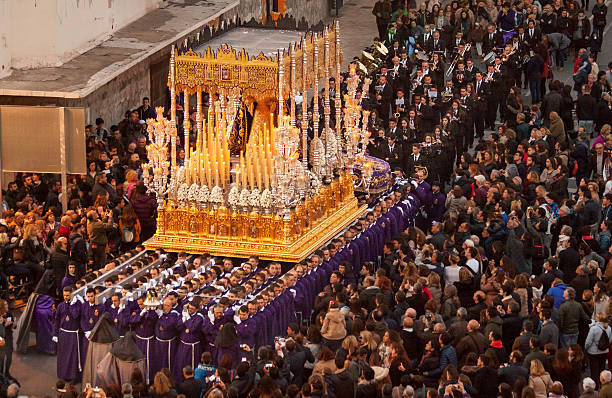
But if the Hindus applied for a parade permit to haul a huge juggernaut down Main Street, the answer would be no, and the reason would be that there would be no public idolatry allowed. Mosques would be okay (there would only be a few of them), but no minarets. No public calls to prayer. Church bells would be fine. No ninety foot statues of Hindu gods by the freeway either. One critic was astonished that I would restrict Catholic displays like this while being as friendly as I am to the Jews. But this is an equal weights and measures thing. The Jews couldn’t have Virgin Mary parades either.
Please note that the level of “persecution” envisaged here is that of denying a parade permit for an idolatrous display. Hindus, Jews, Catholics, and Mormons would be absolutely free to write editorials criticizing the Protestant president, who would likely be, I freely admit, a hypocritical skunk.
A second key distinction is one that I noted in my discussion with John Papola. I argued that the reason why there could be carve outs for Catholics in (our down the road) America is because we have had a long history in which we have worked out certain accommodations. One of the significant accommodations is the fact that in our country, Catholicism has adapted to become part of our voluntarist denominational system, which is a Protestant system. There are forms of Catholicism in other countries where there is no history of that kind at all—and because politics is a prudential exercise in which you work with what you’ve got, it would be the same here. Catholics are already playing the Protestant game here, which is really helpful.
At the end of the day, the reason a stout Protestant republic could not allow a Virgin Mary parade is because it would be public idolatry. Sorry, but there it is. You guys shouldn’t be doing that. But please note that this is not meant to cast any shade on our Lord’s mother herself, who should always be held in high esteem by all Christians everywhere. I even wrote a poem once entitled Our Lady of Westminster, which begins . . .
Marian obedience, the jewelry of God,
has adorned gracious necks
of many great women,
hearts rejoicing in God their Savior.
Fiat mihi.
Religious Liberty Really Is Precious
So I really do believe in religious liberty and liberty of conscience, But we must also recognize that religious liberty is a value that arises from certain religious commitments and not from others. In order to defend religious liberty, it is therefore necessary to keep certain religions and ideologies away from the reins of power.
So I would want to bar a radical Muslim cleric from holding office in this republic of mine, not because I hate religious liberty, but rather because he does. Take the comment made by President Erdoğan of Turkey, when he said that democracy is like a street car. You ride it until you get where you want to go—and then you get off. People whose expressed faith contradicts the constitutional order should never be entrusted with protecting the constitutional order.
People frequently comment on the fact that in John Locke’s famous essay on Toleration, he exempted Catholics and atheists from that toleration. But remember also that he was writing only a century after the Armada. There are circumstances when I think Protestants should celebrate Guy Fawkes Day even harder than they ever did before—but that is not our circumstance. And it is not ours because Protestantism is winning.
We can take a principle from Aristotle here, who distinguished between behaviors that democracies like and behaviors which will preserve democracies. They are not the same behaviors. So is it our duty to maintain democratic processes absolutely even if it means voting in a tyrant, or is it our duty to put up fences to keep that from happening? In other words, democratic absolutism means that democracy itself will soon disappear in a wisp of smoke. Absolutism in democratic processes has this flaw—it cannot defend itself.
In the same way, absolute religious toleration is also insane and, more to the point, it is an approach which devours itself. There is no quicker way to get rid of religious toleration than by introducing a bedlam of competing views and opinions, while demanding that everybody tolerate everything.
I can remember a time when it was easy to accommodate a peaceful Muslim neighbor because he wanted to be Western. But we don’t live in that time anymore. Because of relativism, multi-culturalism, and mass immigration, we live in a time when a Muslim shooter can shoot up a classroom while yelling Allahu Akbar, and all our anointed authorities can tell us is that the motives are yet to be determined. That is the kind of chaos we are living in—the kind of anarcho-tyranny which is deliberately undermining the foundations that make any religious liberty possible.
Religious liberty was a development that grew up out of the Protestant West. It is our baby. We invented it. So people shouldn’t talk as though a decided Protestant culture is the enemy of such liberty . . . it is the historic foundation for it. So a Protestant approach to religious liberty will preserve the maximum amount of religious liberty, including for Catholics, while an absolutist and blind embrace of the idol “religious liberty” will destroy religious liberty. We must have fences; we must have form and freedom together. Christ can provide that, while the Void provides nothing.
What Secularists Miss
One of the central errors that secularists fall into is that of attributing certain practices to our generic human nature, but which were actually inherited from our shared Christian consensus. They serenely believe that they can import millions from the Third World without turning us into the Third World. In their view, because of our shared generic human nature, the only things that might change would be the color of the traffic signs, or the increased availability of exotic restaurants. Everything else would somehow magically stay the same.
This is actually a striking example of a blinkered intellectual bigotry. “Everyone in the world shares my assumptions. Everybody in the world, deep down, agrees with my values. Every person is a white liberal in their heart. We are all different colors, but we all think the same way, that way being a soft socialism.”
This actually is a parasitic worldview, one that has viewed America—a country that was in the main built by the Protestant worldview—as an ever-accommodating host. Not a host welcoming invited guests, but rather a host body feeding the parasites.
So let me conclude with a question. Is it possible for a country to be built by Protestants and to have a Protestant heritage? A Protestant legacy, with that same framework serving as the foundational basis for our laws, customs, and constitutional order? Were such a country to come into existence, would it be lawful and appropriate for such a country to protect and preserve that legacy? Or are Protestants the only ones not allowed to do so?
I really think the question answers itself.